


for Downstream Oil and Gas
Capital Investment Decisions
FEATURED PAPER
By Vanessa Graciela Bernadeth
Jakarta, Indonesia
ABSTRACT
Downstream oil and gas projects are capital-intensive, interface-heavy, and highly dependent on credible front-end planning before capital approval. This paper examines how Front-End Loading (FEL) maturity can be defined, assessed, and validated using Earned Value Management (EVM) indicators to support downstream oil and gas capital investment decisions. Using the seven-step Engineering Economy process, the study compares five analytical alternatives through a two-stage Multi-Attribute Decision Making (MADM) approach: non-compensatory screening and compensatory additive weighting. The selected alternative is an integrated FEL–EVM validation model combining FEL maturity, CPI, SPI, EAC, TCPI, and WBS-level variance review. Four anonymized 2024 downstream oil and gas project cases are tested using EVM-derived maturity and baseline accuracy proxy scores. The findings show that CPI or SPI alone may mislead decision-makers, while the integrated model provides stronger evidence of baseline credibility. The paper concludes that linking FEL maturity to EVM performance strengthens phase-gate governance, baseline control, and the quality of capital investment decisions.
Keywords: Front-End Loading, Earned Value Management, CPI, SPI, Capital Investment Decisions, Downstream Oil and Gas, Phase-Gate Governance, Baseline Credibility
INTRODUCTION
Downstream Oil and Gas Infrastructure in Indonesia
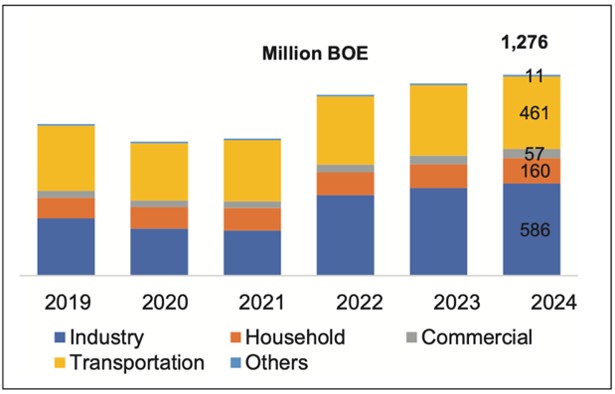
Figure 1 – Indonesia’s Energy Consumption[1]
Data from the Ministry of Energy and Mineral Resources shows that “energy consumption in Indonesia reached 1,276 million BOE in 2024 with an increase of 4.53%.”[2] Pradibta explains that “Indonesia relied heavily on oil as the main source of energy supplier for all its economic activities.”[3] Therefore, large capital downstream infrastructure projects is strategically important and should not be treated merely as construction activities, but as capital investments whose planning quality directly affects long-term operational performance and national supply capability.[4][5]
Project Performance Challenges and the Importance of Front-End Loading
Despite its strategic importance, Wisnugroho reports “56% of projects experience a 10% cost and schedule overrun, and around 36% experience cost and schedule overrun up to 25% at 45 projects”[6]. Zilikram states, “Indonesia’s downstream oil and gas construction practices still lag behind international best-tested and proven practices”[7]. Mukuka, Aigbavboa, and Thwala state that “schedule overruns in construction projects reduce productivity and weaken overall project performance”[8]. These findings suggest that project underperformance is not caused only by poor field execution but originates earlier when projects are authorized with incomplete scope definition, weak schedule logic, immature cost estimates, or insufficient owner decision readiness[9][10][11].
More…
To read entire paper, click here
Author’s note: This paper was originally prepared during a 6-month-long Graduate-Level Competency Development/Capacity Building Program developed by PT Mitrata Citragraha and led by Dr. Paul D. Giammalvo to prepare candidates for AACE CCP or other Certifications. https://build-project-management-competency.com/our-faqs/
How to cite this paper: Bernadeth, V. G. (2026). Validating Front-End Loading Maturity Using Earned Value for Downstream Oil and Gas Capital Investment Decisions; PM World Journal, Vol. XIII, Issue VII, July. Available online at https://pmworldjournal.com/wp-content/uploads/2026/07/pmwj166-Jul2026-Bernadeth-Validating-Front-End-Loading.pdf
About the Author

Vanessa Graciela Bernadeth
Jakarta, Indonesia

Vanessa Graciela Bernadeth is an engineer with professional experience in project management, budgeting, payment control, and facilities management in the downstream oil and gas sector. Currently, she works as an engineer at the national oil company of Indonesia. Several projects and assignments have been supported in various downstream oil and gas facilities, including fuel terminal and related infrastructure, with a focus on project scheduling, project management, cost monitoring, and facilities reliability. She holds a bachelor’s degree in civil engineering from Universitas Gadjah Mada and has international academic exposure through an exchange program at Ehime University, Japan. She is attending a distance learning mentoring course, under the tutorage of Dr. Paul D. Giammalvo, CDT, CCE, MScPM, MRICS, GPM-m, Senior Technical Advisor at PT Mitratata Citragraha to attain Certified Cost Professional (CCP) certification from AACE International.
Vanessa lives in Jakarta, Indonesia and can be contacted at: vgbernadeth@gmail.com
[1] Ministry of Energy and Mineral Resources, Republic of Indonesia. (2024). Handbook of Energy & Economic Statistics of Indonesia 2024. https://www.esdm.go.id/id/publikasi/handbook-of-energy-economic-statistics-of-indonesia
[2] Ibid
[3] Pradibta, I. (2024). Developing a standardized, multidimensional WBS/CBS coding structure for storage tanks. PM World Journal, 13(3). https://pmworldlibrary.net/wp-content/uploads/2024/03/pmwj139-Mar2024-Pradibta-Standardized-Multidimensional-WBS-CBS-for-Storage-Tanks.pdf
[4] Ministry of Energy and Mineral Resources Republic of Indonesia. (2024). Loc. Cit
[5] Pradibta, I. Loc. Cit
[6] Wisnugroho, J. (2020). Indonesia Oil & Gas Cost Estimating vs International “Best-Tested and Proven” Practices – A Benchmarking Study; PM World Journal, Vol. IX, Issue II, February. https://pmworldlibrary.net/wp-content/uploads/2020/02/pmwj90-Feb2020-Wisnugroho-benchmarking-indonesia-og-cost-estimating-vs-international3.pdf
[7] Zilikram, M. F. (2023). Benchmarking Indonesia’s Downstream Oil & Gas Construction: Evaluating Project Scheduling and Cost Estimating Processes Against Global “Best-Tested and Proven” Practices; PM World Journal, Vol. XII, Issue X, October. https://pmworldjournal.com/article/benchmarking-indonesias-downstream-oil-gas-construction
[8] Ibid
[9] Mukuka, M., Aigbavboa, C., & Thwala, W. (2015). Effects of construction projects schedule overruns: A case of the Gauteng Province, South Africa. https://doi.org/10.1016/j.promfg.2015.07.988
[10] Zilikram, M. F. Loc. Cit.
[11] Wisnugroho, J. (2020). Loc. Cit.