

Applying PMBOK® 8th Edition’s Tailoring
Framework to Project Management in Post-War
Peacebuilding Contexts: The Case of Syria
FEATURED PAPER
By Ahmad Khalil Khanji, PMP®
Khanji Engineering Office
Damascus, Syria
Abstract
This paper develops a practitioner-academic framework for applying the tailoring logic of PMBOK® 8th Edition to project management in post-war peacebuilding contexts, using Syria’s post-2024 political transition as its primary analytical case. Drawing on close textual analysis of PMBOK® 8’s Tailoring Chapter and seven performance domains, comparative case analysis of post-conflict reconstruction in Lebanon and Bosnia, and a decade of direct field engagement in Syria across engineering, project management, and peacebuilding roles, the paper identifies two systemic conditions that fundamentally alter the project management environment in post-regime-collapse contexts: loyalty-based institutional staffing, which creates a gap between formal authority and operational competence (the ‘authority-competence gap’); and parallel governance structures, in which informal authority networks compete with formal governmental decision-making (the ‘dual-track authority problem’). The paper develops domain-by-domain tailoring guidance across all seven PMBOK® 8 performance domains, proposes a five-component value realisation framework that reconceptualises ‘delivering value’ for fractured community contexts, and introduces a politically-anchored iterative tailoring cycle triggered by governance, legislative, security, and demographic events rather than calendar intervals. The paper addresses a gap in the project management literature: the absence of a systematic framework for applying PMBOK® 8’s tailoring architecture to post-regime-collapse governance environments.
Keywords: PMBOK® 8, tailoring, post-war project management, peacebuilding, Syria reconstruction, parallel governance, loyalty-based staffing, value delivery, social cohesion, post-conflict governance
- Introduction
The Project Management Body of Knowledge (PMBOK®) 8th Edition, published by the Project Management Institute in 2025, represents a fundamental philosophical reorientation in how the field conceptualises its own practice. Rather than prescribing processes, it establishes principles and performance domains within which practitioners are expected to exercise professional judgement, calibrating their approach to the specific conditions of each project environment. The centrepiece of this reorientation is the standalone Tailoring Chapter — new in the 8th edition — which formalises an iterative four-step adaptation cycle and positions tailoring as a core professional competence rather than a deviation from standard practice (PMI, 2025).
Project management in post-war peacebuilding contexts has historically occupied an uncomfortable position between two professional communities: project management practitioners who bring rigorous frameworks but limited conflict-sensitivity, and peacebuilding practitioners who understand communal dynamics and political economy but rarely engage with systematic tools of project governance. This paper argues that PMBOK® 8’s tailoring architecture, properly adapted, can bridge that gap — offering peacebuilding-oriented reconstruction a level of project governance discipline the field has often lacked, while remaining genuinely responsive to the social, political, and institutional conditions that make post-war environments categorically different from standard project settings.
This paper contends that PMBOK® 8’s tailoring architecture, precisely because of its emphasis on environmental adaptation and value delivery rather than process compliance, offers the most professionally sound available framework for managing reconstruction projects in Syria’s post-2024 transition period. In Syria, the conditions that tailoring must address are not simply difficult versions of familiar challenges. They are categorically distinct: social cohesion is fractured along communal lines; political loyalties within the emerging state apparatus shape every institutional interaction; governance structures are opaque and contested; parallel authority networks operate alongside and frequently above formal governmental channels; and institutional appointments reflect political allegiance rather than professional merit. The two most structurally significant of these conditions are a post-revolutionary bureaucracy staffed primarily on the basis of political loyalty rather than professional competence, and a parallel governance landscape in which informal authority networks operate alongside, and frequently in competition with, formal governmental structures.
Syria is not simply a post-conflict reconstruction context. It is a post-regime-collapse context — a distinction with profound implications for project management. When a regime collapses rather than negotiating an end to conflict, the institutional knowledge embedded in its bureaucratic apparatus does not transition to a successor government; it dissolves. What remains are structures without reliable processes, titles without reliable authority, and formal systems whose relationship to actual decision-making power is opaque, contested, and subject to rapid change.
The paper proceeds as follows. Section 2 reviews relevant literature at the intersection of project management theory, post-conflict governance, and tailoring practice. Section 3 analyses Syria’s current governance environment through the two systemic conditions identified above. Section 4 develops domain-by-domain tailoring guidance across PMBOK® 8’s seven performance domains. Section 5 addresses the reconceptualisation of value delivery for fractured community contexts. Section 6 proposes a politically-anchored iterative tailoring cycle. Section 7 draws comparative lessons from Nahr el-Bared in Lebanon and Mostar in Bosnia. Section 8 presents conclusions and recommendations.
More…
To read entire paper, click here
How to cite this paper: Khanji, A. K. (2026). Tailoring for Fracture: Applying PMBOK® 8th Edition’s Tailoring Framework to Project Management in Post-War Peacebuilding Contexts: The Case of Syria; PM World Journal, Vol. XV, Issue VII, July. Available online at https://pmworldjournal.com/wp-content/uploads/2026/07/pmwj166-Jul2026-Khanji-Tailoring-For-Fracture-2.pdf
About the Author
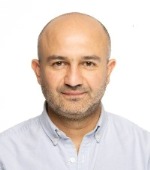
Ahmad Khalil Khanji
Damascus, Syria

Ahmad Khalil Khanji, PMP® is a Damascus-based project management practitioner, peacebuilding expert, and researcher. He holds Master’s degrees in Post-War Recovery Studies from the University of York (UK, Chevening Scholar, 2016) and Political Science — Peacebuilding and Conflict Resolution from York University, Toronto, Canada (2020), and a BSc in Mechanical Engineering from Damascus University. He has field experience in engineering project management, and in peacebuilding and conflict sensitivity programming. He is the founder of Knowledge for Peace (K4P), a MENA-focused peacebuilding platform, and founder of Khanji Engineering Office, Damascus. His most recent publication is ‘Stability vs. Legitimacy: Syria’s Central Transitional Dilemma,’ Manara Magazine, Cambridge Middle East and North Africa Forum (MENAF), June 2026. Contact: gokhanji@live.com