

ADVISORY
By Harold Kerzner, Ph.D. and Al Zeitoun, Ph.D.
California & Maryland, USA
INTRODUCTION _______________________________________________________
During the past decade, one of the most important words in the project manager’s vocabulary has been “resilience.” Resilience is the ability to adapt, recover, and maintain stability when faced with unexpected changes that can occur, perhaps on a regular basis, and can impact on the objectives, deadlines, and how people perform their work. If resilience is not managed effectively and people are removed from their comfort zones and sense of equilibrium, negative consequences can result.
Years ago, resilience was discussed primarily as part of enterprise risk management studies as to how well traditional organizational management reacted to a loss of important business, the growth in new business, the addition of new functional units or the removal of functional units. Today, resilience application studies have been published for many disciplines and industries. All organizations and disciplines can be impacted by changes requiring the implementation of resilience practices.
Another dimension that brought resilience to the forefront is the ongoing and nonstop transformation that organizations and leaders are having to go through. A thread that is starting to develop in transformations that show success signs has been pointing to the criticality of resilience as a capability, the associated level of adaptability that is exhibited within the organizational culture, and the degree of openness and willingness to learn, and see opportunities in these times of increasing uncertainty.
GROWTH OF RESILIENCE IN PROJECT MANAGEMENT ______________________
In traditional enterprise management systems, the need for resilience management practices is often easier to identify and perform because the expected changes are mostly predictable and the impacts are often known. Because projects are temporary and must come to an end at a predetermined time, there is often a greater level of uncertainty, and the outcomes may be unpredictable.
In projects, the variations and challenges that can occur significantly increase the possible negative effects, as well as the need for immediate project resilience practices. However, the growth in challenges and the need for project resilience may come to an end when the project is completed. In organizational management systems, resilience usually impacts on an entire business unit whereas in projects, the impact can be at an individual level or project team level but may grow and can eventually affect an entire organizational unit and various stakeholder levels.
In enterprise management systems, functional organizations generally struggled with changes needed and did not handle resilience well. There existed a heavy reliance on bureaucracy to solve problems. Many organizations established resilience projects that focused almost exclusively on enterprise resilience efforts. In traditional project management, project managers historically were often not responsible for managing resilience. Whenever problems, challenges or disruptions occurred, project managers would bring the issues to the project sponsors who then managed resilience using formal authority. Resilience management on traditional projects was considered as a temporary solution because projects would eventually come to an end and workers could then forget about the disturbances and continue as they had before.
All of this has now changed. Companies are now working on more projects that require innovation and creativity and are expected to last much longer than traditional projects. Project management has been converted from technical to a business discipline. Project managers are now expected to make business-related decisions as well as technical decisions. Companies believe they are now managing their entire business by projects and project management is one of the four or five most important career paths needed for business growth and survival.
Risk management has always been one of the most important skills for project managers. Historically, project managers adopted a reactive risk management approach by waiting for the risk to appear before taking action. Today, project managers are proactive and are expected to anticipate the risks that might appear and plan for their resolution. The challenges faced with many of the newer projects and the growth of the VUCA environment (volatility, uncertainty, complexity and ambiguity) have made it apparent that project managers cannot always manage the expected risks simply by estimating the probability of occurrence and expected outcomes. Many of the risks are unknown unknowns rather than known unknowns. Proactive resilience is now a major contributor to how project managers address risks and crises.
The importance of project management to organizations has made it clear that project managers can no longer rely upon bureaucratic oversight for managing critical issues and must take the lead in addressing resilience management efforts. Project managers now have responsibility for leadership that includes resilience management. The newly released 8th edition of the PMBOK® Guide briefly discusses the importance of resilience but does not provide any specific instructions on how to perform resilience management. There are published papers and papers presented at conferences that are now increasingly addressing the topic.
RESILIENCE CHALLENGES AND SOLUTIONS ______________________________
Project managers understand the need to be able to respond quickly and adapt to problems, challenges, disruptions and other serious issues that can prevent a successful project outcome. Effective project management leadership must include a project or business resilience framework that helps the project team bounce back from uncertainties which will most certainly occur with many of the new types of projects.
Resilience requires understanding how people are impacted by changes and creates a framework for resilience management, as highlighted in Figure 1. Resilience practices are today part of effective project management leadership and include:
More…
To read entire article, click here
How to cite this article: Kerzner, H., Zeitoun, A. (2026). Resilience as a Core PM Capability, PM World Journal, Vol. XV, Issue VII, July. Available online at: https://pmworldjournal.com/wp-content/uploads/2026/07/pmwj166-Jul2026-Kerzner-Zeitoun-Resileince-as-Core-PM-Competency.pdf
About the Authors

Harold Kerzner, Ph.D., MS, M.B.A
Senior Executive Director for Project Management
International Institute of Learning
New York & California, USA

Dr. Harold Kerzner is Senior Executive Director for Project Management for the International Institute for Learning (IIL). He has an MS and Ph.D. in Aeronautical and Astronautical Engineering from the University of Illinois and an MBA from Utah State University. He is a prior Air Force Officer and spent several years at Morton-Thiokol in project management. He taught engineering at the University of Illinois and business administration at Utah State University, and for 38 years taught project management at Baldwin-Wallace University. He has published or presented numerous engineering and business papers and has had published more than 60 college textbooks/workbooks on project management, including later editions. Some of his books are (1) Project Management: A Systems Approach to Planning, Scheduling and Controlling; (2) Project Management Metrics, KPIs and Dashboards, (3) Project Management Case Studies, (4) Project Management Best Practices: Achieving Global Excellence, (5) PM 2.0: The Future of Project Management, (6) Using the Project Management Maturity Model, and (7) Innovation Project Management.
He is a charter member of the Northeast Ohio PMI Chapter.
Dr. Kerzner has traveled around the world conducting project management lectures for PMI Chapters and companies in Japan, China, Russia, Brazil, Singapore, Korea, South Africa, Canada, Ireland, Germany, Spain, Belgium, Poland, Croatia, Mexico, Trinidad, Barbados, The Netherlands, Sweden, Finland, Venezuela, Columbia, United Arab Emirates, France, Italy, England, and Switzerland. He delivered a keynote speech at a PMI Global Congress on the future of project management.
His recognitions include:
-
- The University of Illinois granted Dr. Kerzner a Distinguished Recent Alumni Award in 1981 for his contributions to the field of project management.
-
- Utah State University provided Dr. Kerzner with the 1998 Distinguished Service Award for his contributions to the field of project management.
-
- The Northeast Ohio Chapter of the Project Management Institute gives out the Kerzner Award once a year to one project manager in Northeast Ohio that has demonstrated excellence in project management. They also give out a second Kerzner Award for project of the year in Northeast Ohio.
-
- The Project Management Institute (National Organization) in cooperation with IIL has initiated the Kerzner International Project Manager of the Year Award given to one project manager yearly anywhere in the world that demonstrated excellence in project management.
-
- The Project Management Institute also gives out four scholarships each year in Dr. Kerzner’s name for graduate studies in project management.
-
- Baldwin-Wallace University has instituted the Kerzner Distinguished Lecturer Series in project management.
-
- The Italian Institute of Project Management presented Dr. Kerzner with the 2019 International ISIPM Award for his contributions to the field of project management.
Dr. Harold Kerzner can be contacted at hkerzner@hotmail.com
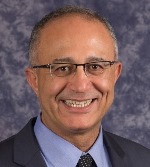
Dr. Al Zeitoun, PgMP, PMI Fellow
System Thinker & Transformation Advisor
Maryland USA
Dr. Al Zeitoun is a Future of Work, business optimization, and operational performance excellence thought leader with global experiences in strategy execution. His experiences encompass leading organizations; delivering their Enterprise Digital and Business Transformation; guiding fitting frameworks implementations; and using his empathy, engineering insights, and collaboration strengths to successfully envision new business models and execute complex missions across diverse cultures globally.
In his recent role with Siemens, he was a Senior Director of Strategy responsible for driving the global program management practices, Master Plan governance, and enabling the Strategy Transformation processes and priorities.
In his position, as the Executive Director for Emirates Nuclear Energy Corporation, Abu Dhabi, UAE, he was responsible for creating the strategy execution framework, achieving transformation benefits, governance excellence, and creating the data analytics discipline necessary for delivering on the $40B complex country energy mission roadmap.
At the McLean, USA HQ of Booz Allen Hamilton, Dr. Zeitoun strategically envisioned and customized digitally enabled EPMO advisory, mapped playbooks, and capability development for clients’ Billions of Dollars strategic initiatives. Furthermore, he led the firm’s Middle East North Africa Portfolio Management and Agile Governance Solutions.
With the International Institute of Learning, Dr. Zeitoun played a senior leader and global trainer and coach. He was instrumental in driving its global expansions, thought leadership, and operational excellence methodology to sense and shape dynamic ways of working across organizations worldwide. He speaks English, Arabic, and German and enjoys good food, travel, and volunteering. Dr. Al Zeitoun can be contacted at zeitounstrategy@gmail.com