

FEATURED PAPER
By Dr Tom Crow, BE; Professor Shankar Sankaran, BE;
Ted Tooher, BE; John Templeman, BE
Sydney, Australia
- Abstract
This paper explains how and why project governance maturity models can be an important strategy to add value to Gateway Reviews and improve infrastructure productivity in Australia. The paper documents where and why project processes fail to deliver outcomes. It aims to demonstrate how investment in leadership, integrated teams, and a quality assurance culture centered on accountability can be tracked and managed using maturity models as tools for managing risk, grasp opportunities and lead to continuous improvement.
Underperformance of infrastructure projects has shown to be rarely related to failure of technology. It usually stems from a lack of project governance which manifests as deficient project cultures and lack of accountability. This results in not achieving the desired project outcomes because of a range of issues, e.g. wasted effort, lack of planning/quality systems, deviations from standard procedures, ill-defined project strategies, commercial conflict.
By enhancing Gateway Reviews with Governance Maturity Models, process deviations resulting from poor cultures and lack of accountability can be identified, objectively quantified and then tracked throughout the project. Maturity Models can merge project management (hard) and project leadership (soft) elements inter-dependencies and effectively highlight the “knock-on effect” impacting continuous improvement.
Project culture is the main influence of outcomes, and the main creator of positive cultures is collaboration between team members during project management tasks (e.g. during workshops) (Castaner & Oliveira, 2020)
Governance maturity models are frameworks used to evaluate and improve an organization’s capability to deliver projects or services successfully, typically progressing through five levels from ad hoc processes to optimization. These models provide a roadmap for enhancing efficiency, consistency, and strategic alignment. Higher maturity is usually linked to significant cost savings and or better value (figure 1).
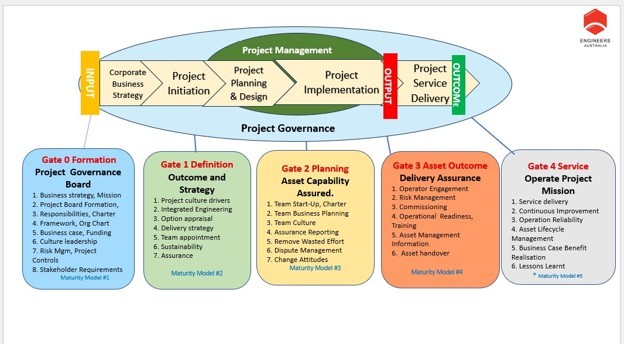
Figure 1 Project Governance Gateways Framework
- Gateway Review Process
The Gateway Review Process has been in place for approximately 10 years across all jurisdictions in Australia, including the States and Commonwealth.
The following definitions are relevant:
More…
To read entire paper, click here
Editor’s note: To assist in reading some of the figures and tables in this document, zoom to 150% or more.
How to cite this paper: Crow, T., Sankaran, S., Tooher, T., Templeman, J. (2026). Enhancing Gateway Reviews with Governance Maturity Models; PM World Journal, Vol. XV, Issue VII, July. Available online at https://pmworldjournal.com/wp-content/uploads/2026/07/pmwj166-Jul2026-Crow-et-al-Enhancing-Gateway-Reviews.pdf
About the Authors

Dr. Tom Crow, PE
Sydney, Australia

Dr Tom Crow BE, MBuil, DTech, FIE Aust, EngExec, CMC, MAICD is a graduate civil engineer with a master’s degree in building science and a Doctorate in Strategic Planning of Infrastructure Projects. He has practiced as a certified management consultant for 40 years and is also an Infrastructure Sustainability Accredited Professional. His experience encompasses all leadership and management responsibilities in the construction industry from project governance to client development manager, delivery strategic planning, team coach, management of change, post graduate trainer, performance auditor, project manager, supply chain manager and project controls. With this all-encompassing experience, in 2004 he was awarded a Doctorate in Strategic Planning of Projects. This included preparation of Maturity Models that assisted the effective formation, implementation and auditing of Project Governance Boards to achieve outstanding project development outcomes.
Prof Shankar Sankaran, PE
Sydney, Australia
Shankar Sankaran PhD PMP PMI Fellow, Professor of Organizational Project Management at the University of Technology Sydney (UTS) Australia. He is a member of the faculty of Design and Society at UTS where he teaches advance level subjects at the Master of Project Management course including Project Governance, Project Leadership, Digital Transformation and Systems Thinking. His research areas are in project governance, project leadership, sociotechnical systems, and action research. Shankar has won awards for research excellence from PMI and IPMA. He is a Chief Investigator in two Australian Research Council (ARC) funded research grants, one in an Industry Transformation Research Hub for Human Robot Teams for Sustainable and Resilient Construction and Project Governance and Governmentality as Collaborative Challenges. Shankar has been involved in the publication of 15 books including a research handbook on project governance and has published and/or presented over 150 peer reviewed research publications in international conferences and journals. Shankar worked for several years in industry as a project manager, and a technical director in a Japanese MNC in Singapore before joining academia in Australia in 1999. He has been serving a PMI as a Volunteer for over 20 years including serving as a Chair of the Board of PMI’s Global Accreditation Centre, and as an Associate Editor of Project Management Journal. Shankar is also a member of the College of Leadership and Management’s Sydney Committee at Engineers Australia where he works with other committee members to promote project governance to improve the performance of major projects in Australia. Shankar is an Honorary Academic Advisor of PM World Journal from Australia

Ted Tooher, PE
Sydney, Australia
Ted Tooher BSc., BE(Civil), MPM, Eng Exec., LFAIPM, FIEAust. After qualifying in Computer Science and Civil Engineering he started as a Main Roads, Works Engineer for 200 staff and roads, bridges, and ferries. From these beginnings he went onto manage majors, Infrastructure, IT, Health reform, Transport and education Projects. In 1980 with a master’s in project management, he moved to Project Direction, as a Certified Practitioner (AIPM), Management Consulting in strategic planning, economic analysis, asset recycling, and gateway reviews. He has directed, Consulted or Managed, Health, Education, Urban Development, Housing, Transport, Nuclear Fusion and Fission, Oil, and gas, Highrise, Industrial Plant and Energy. He founded consulting companies in the UK, and Australia, including TSA Management in 1990, now over 1000 staff. He served as Adjunct Professor and Adjunct Associate Professor, lecturing in Project Direction and Management. Author of several papers on Risk management and Complexity on projects he specialises in Economic analysis, gateway reviews and Project Governance.

John Templeman, PE
Sydney, Australia
John Templeman BE, GAICD has substantial experience as a Project Leader and business executive with over 40 years’ experience within the infrastructure sector, across the transport (road, rail and rollingstock), water and wastewater, mining, defense, manufacturing and heavy industrial domains. In his previous Project Director roles, he has had single point accountability for:
- High capital value and complex programs (>$2Bn) in both private and public sectors
- Leadership and direct oversight of procurement and transaction management, for high value and intricate contracting models.
- Business case development and securing funding to proceed
- Strategic planning and execution of commercial strategies
- Extensive stakeholder engagement.
- The financial performance for programs
- The implementation of risk assessment and risk control measures
- Asset management for road and rail assets