

Calculating Our Average Costs
or Durations?
COMMENTARY
By Dr. Paul D. Giammalvo
Jakarta, Indonesia
This is a FOLLOW-ON Advisory article to the December posting by Dr. Ken Smith, “Given Extant Averages, Which is Best for Your Business?[1] to help us APPLY our average data in a practical and useful way, especially for those who continue to believe in and support the origins of Earned Value Management as captured and documented by Gillette and Dana in their 1909 book “Cost Keeping and Management Engineering: A Treatise for Engineers, Contractors and Superintendents Engaged in the Management of Engineering Construction.”
BACKGROUND INFORMATION- INTRODUCING SIMPSON’S PARADOX
As noted, we have long advocated the “5 Immutable Laws of Planning and Scheduling” to help us understand why so many projects run late and/or over budget.

Figure 1- The 5 IMMUTABLE laws of Planning and Scheduling.
In this paper, we are going to focus on Architect Ludwig Mies Van der Rohe with his observation that “God (or the devil?) Lies in the Details”, which is why we are opening with the introduction of the Simpson Paradox.[2]
Simpson’s Paradox is a statistical phenomenon in which an association between two variables in a population appears, disappears, or reverses when the population is divided into subpopulations. For instance, two variables may be positively associated in a population, but be independent or even negatively associated in all subpopulations.
To explain Simpson’s Paradox, we rely on another highly trusted and respected Cost Engineer colleague from NASA, Glenn Butts.[3]
More…
To read entire article, click here
How to cite this paper: Giammalvo, P. D. (2026). What Do We Do AFTER Calculating Our Average Costs or Durations? PM World Journal, Vol. XV, Issue I, January. Available online at https://pmworldjournal.com/wp-content/uploads/2026/01/pmwj160-Jan2026-Giammalvo-what-we-do-after-calculating-averages.pdf
About the Author
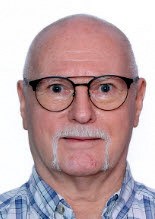
Dr. Paul D. Giammalvo
Jakarta, Indonesia

Dr. Paul D. Giammalvo, CDT, CCE (#1240), MScPM, MRICS, is a Senior Technical Advisor (Project Management) to PT Mitratata Citragraha. (PTMC), Jakarta, Indonesia. www.build-project-management-competency.com. He is noted for the development and delivery of graduate level, blended learning curricula designed for the mid-career path, English as Second Language (ESL) professionals to develop competency in the local practitioner and build capacity for the local organizations. For 25+ years, he has been developing and delivering Project Management training and consulting throughout South and Eastern Asia Pacific, the Middle East, West Africa, and Europe.
He is also active in the Global Project Management Community, by playing a “thought leadership” role for the Association for the Advancement of Cost Engineering International, (AACEI) http://www.aacei.org/ since 1991; He has also been active in two IPMA member organizations: The Green Project Management Association (GPM) http://www.greenprojectmanagement.org/ where he served on the Certification Board of Directors for two years and the American Society for the Advancement of Project Management http://www.asapm.org/ for which he served for four years on the BoD as Director of Marketing. He also sat on the Board of Directors of the Global Alliance for Project Performance Standards (GAPPS), www.globalpmstandards.org, Sydney, Australia and is active as a regional leader. Currently, he is a compensated consultant to the International Guild of Project Controls. http://www.planningplanet.com/guild as the primary author of their “Compendium and Reference” as well as the chief architect of their competency-based credentialing program. http://www.planningplanet.com/guild/certification
He has spent 35 of the last 50 years working on large, highly technical international projects, including such prestigious projects as the Alyeska Pipeline and the Distant Early Warning Site (DEW Line), upgrades in Alaska and the Negev Airbase Constructors, Ovda, Israel and the Minas Oil Field in Rumbai, Sumatra. His current client list includes Fortune 500 major telecommunications, oil, gas and mining companies plus the UN Projects Office and many other multi-national companies, NGO organizations and Indonesian Government Agencies.
In addition to 45+ years of hands-on field experience, Dr. Giammalvo holds an undergraduate degree in Construction Management, his Master of Science in Project Management through the George Washington University and was awarded his PhD in Project and Program Management through the Institute Superieur De Gestion Industrielle (ISGI) and Ecole Superieure De Commerce De Lille (ESC-Lille) under the supervision of Professor Christophe Bredillet. “Dr. PDG” can be contacted at pauldgphd@gmail.com.
To view other original work by Paul Giammalvo, visit his author showcase in the PM World Library at http://pmworldlibrary.net/authors/dr-paul-d-giammalvo/
[1] Smith, K. F. (2025). Given Several Extant Averages; Which is Best for Your Business? PM World Journal, Vol. XIV, Issue XII, December Available online at https://pmworldlibrary.net/wp-content/uploads/2025/12/pmwj159-Dec2025-Smith-which-is-best-average-to-use-advisory-2.pdf
[2] Simpson’s Paradox Defined https://plato.stanford.edu/entries/paradox-simpson/#:~:text=Table%201:%20Simpson’s%20Paradox:%20the,but%20at%20the%20same%20time%2C
[3] Butts, Glenn- https://www.slideshare.net/slideshow/glennbutts-mega-projects-estimates/9907986 Slide #25/48