

ADVISORY ARTICLE
By Harold Kerzner, Ph.D. and Al Zeitoun, Ph.D.
Florida and Maryland, USA
THE IMPORTANCE OF UNDERSTANDING EGOS _____________________________
The growth and importance of project management leadership and the behavioral side of project management have brought to the surface the necessity to effectively manage ego-driven behaviors demonstrated by the project team members. Potential issues can arise when project managers or team members have ego issues that can impact project performance. Ego issues could have an impact on how team members work together, how decisions are made, and how successful the outcome of the project will be.
Not all situations surrounding egos are detrimental. An effective understanding of egos can be highly beneficial in project management if egos are understood and controlled. We tend to think about egos in negative terms such as having a negative ego that can incur problems and alienate colleagues. But there are also positive egos that can be highly beneficial in project management practices. Both types will be discussed in this article with an emphasis on the correlation to the project management environment.
GENERIC TYPES OF EGOS ______________________________________________
We all have an ego that impacts how we react to favorable and unfavorable situations, such as on projects. Our ego also impacts our relationship with others, such as project team members and stakeholders. Egos help people understand themselves better and how important they believe themselves to be.
Egos generally fall into two categories: positive and negative egos. A positive ego focuses on bringing us some degree of happiness even in unfavorable situations. As an example, if mistakes are made on a project, a positive ego allows us to view it as a learning experience. It also prevents us from overreacting. As another example, you are working on a project with requirements that may not be achievable. With a positive ego, you feel calm and grateful to be assigned to this challenging project despite the difficulties. Project failure is seen as an opportunity for the future rather than a personal failure.
With a negative ego, you might feel misery and pain due to the difficult situation you are in and begin complaining. You might try to transfer the misery and pain you feel to others and make them feel responsible for your assignment on this difficult project. Workers do not want to be around people and team members that demonstrate negative egos.
People with positive egos navigate challenges and do not try to hurt others with their words, actions or body language. Positive egos reduce tension regardless of the situation. Emphasis is placed upon identifying possible favorable outcomes.
THE TECHNICAL SUPERIORITY EGO _____________________________________
The behavioral issues associated with project management have been well known since the early days of project management. One of the most common egos discussed in the early years of project management was the technical superiority ego among engineers.
In the 1970s, an aerospace and defense contractor had most of their project teams composed of engineers with advanced degrees in technical disciplines. While this appeared to be a good approach with good intentions, it was accompanied by significant behavioral issues, specifically involving egos related to technical achievements.
More…
To read entire article, click here
How to cite this article: Kerzner, H., Zeitoun, A. (2025). The impact of Egos on Project Management, PM World Journal, Vol. XIV, Issue XII, December. Available online at https://pmworldjournal.com/wp-content/uploads/2026/01/pmwj159-Dec2025-Kerzner-Zeitoun-the-impact-of-egos-on-project-management.pdf
About the Authors
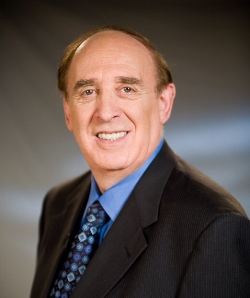
Harold Kerzner, Ph.D., MS, M.B.A
Senior Executive Director for Project Management
International Institute of Learning
New York & Florida, USA

Dr. Harold Kerzner is Senior Executive Director for Project Management for the International Institute for Learning (IIL). He has an MS and Ph.D. in Aeronautical and Astronautical Engineering from the University of Illinois and an MBA from Utah State University. He is a prior Air Force Officer and spent several years at Morton-Thiokol in project management. He taught engineering at the University of Illinois and business administration at Utah State University, and for 38 years taught project management at Baldwin-Wallace University. He has published or presented numerous engineering and business papers and has had published more than 60 college textbooks/workbooks on project management, including later editions. Some of his books are (1) Project Management: A Systems Approach to Planning, Scheduling and Controlling; (2) Project Management Metrics, KPIs and Dashboards, (3) Project Management Case Studies, (4) Project Management Best Practices: Achieving Global Excellence, (5) PM 2.0: The Future of Project Management, (6) Using the Project Management Maturity Model, and (7) Innovation Project Management.
He is a charter member of the Northeast Ohio PMI Chapter.
Dr. Kerzner has traveled around the world conducting project management lectures for PMI Chapters and companies in Japan, China, Russia, Brazil, Singapore, Korea, South Africa, Canada, Ireland, Germany, Spain, Belgium, Poland, Croatia, Mexico, Trinidad, Barbados, The Netherlands, Sweden, Finland, Venezuela, Columbia, United Arab Emirates, France, Italy, England, and Switzerland. He delivered a keynote speech at a PMI Global Congress on the future of project management.
His recognitions include:
-
- The University of Illinois granted Dr. Kerzner a Distinguished Recent Alumni Award in 1981 for his contributions to the field of project management.
-
- Utah State University provided Dr. Kerzner with the 1998 Distinguished Service Award for his contributions to the field of project management.
-
- The Northeast Ohio Chapter of the Project Management Institute gives out the Kerzner Award once a year to one project manager in Northeast Ohio that has demonstrated excellence in project management. They also give out a second Kerzner Award for project of the year in Northeast Ohio.
-
- The Project Management Institute (National Organization) in cooperation with IIL has initiated the Kerzner International Project Manager of the Year Award given to one project manager yearly anywhere in the world that demonstrated excellence in project management.
-
- The Project Management Institute also gives out four scholarships each year in Dr. Kerzner’s name for graduate studies in project management.
-
- Baldwin-Wallace University has instituted the Kerzner Distinguished Lecturer Series in project management.
-
- The Italian Institute of Project Management presented Dr. Kerzner with the 2019 International ISIPM Award for his contributions to the field of project management.
Dr. Harold Kerzner can be contacted at hkerzner@hotmail.com
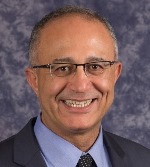
Dr. Al Zeitoun, PgMP, PMI Fellow
Strategy Advisor & Global Future of Work Executive
Maryland USA
Dr. Al Zeitoun is a Future of Work, business optimization, and operational performance excellence thought leader with global experiences in strategy execution. His experiences encompass leading organizations; delivering their Enterprise Digital and Business Transformation; guiding fitting frameworks implementations; and using his empathy, engineering insights, and collaboration strengths to successfully envision new business models and execute complex missions across diverse cultures globally.
In his recent role with Siemens, he was a Senior Director of Strategy responsible for driving the global program management practices, Master Plan governance, and enabling the Strategy Transformation processes and priorities.
In his position, as the Executive Director for Emirates Nuclear Energy Corporation, Abu Dhabi, UAE, he was responsible for creating the strategy execution framework, achieving transformation benefits, governance excellence, and creating the data analytics discipline necessary for delivering on the $40B complex country energy mission roadmap.
At the McLean, USA HQ of Booz Allen Hamilton, Dr. Zeitoun strategically envisioned and customized digitally enabled EPMO advisory, mapped playbooks, and capability development for clients’ Billions of Dollars strategic initiatives. Furthermore, he led the firm’s Middle East North Africa Portfolio Management and Agile Governance Solutions.
With the International Institute of Learning, Dr. Zeitoun played a senior leader and global trainer and coach. He was instrumental in driving its global expansions, thought leadership, and operational excellence methodology to sense and shape dynamic ways of working across organizations worldwide. He speaks English, Arabic, and German and enjoys good food, travel, and volunteering. Dr. Al Zeitoun can be contacted at zeitounstrategy@gmail.com