

a Consumption-Function Conundrum
STORY
By Dr. Kenneth Smith, PMP
Honolulu, Hawaii
& Manila, The Philippines
“Food grows by 1, 2, 3…
but population grows by 1, 2, 4…”
The Dismal ‘Song of Malthus’
Foreword. This is the first in a series of stories — rather I should say ‘Parables’ — from my professional past, as each contains one or more project management ‘Lessons Learned’ for you.
During 1968, despite the on-going war in South Vietnam, concurrent with several other ongoing in-country humanitarian programs, as an active participant in the world-wide ‘Green Revolution’ to alleviate famine, the U.S. Agency for International Development’s (USAID) Saigon Mission turned its attention to increasing Vietnam’s rice crop production. USAID contracted several consultants from Colorado[1] and researchers from the University of the Philippines Los Banos Rodent Research Institute (UP/LB) (RRI) to join forces and focus on Vietnam’s field-rat problem. Collectively, we called them “rat men’ — or “rat finks” after a contemporary cartoon character — jokingly of course; which they all took in good humor.
The collaborative cohort concluded a statistically-significant amount (as much as one-third) of South Vietnam’s rice pre-harvest potential was being lost to Rattus argentiventer, commonly called rice-field rats; Chuột đồng lớn in Vietnamese.
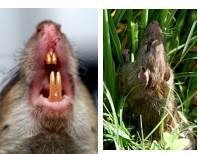
To address the issue, the rat research team proposed that USAID assist the Vietnamese government launch an intensive rat control program[2] consisting of trapping & killing rats in the rice paddies, as well as the drying & storage areas after the harvest. To encourage farmer participation, and also to assure the rats had actually been killed, they suggested an incentive system – i.e. paying a token bounty for every rat killed.
Body-counting was not an ‘out of the box’ concept; contemporarily US/MACV[3] was applying it to estimate battle performance vis a vis the Viet Cong. But although the prospect of being able to assess post-program results in terms of “body-counts” statistically-correlated with post-harvest production levels[4] was intriguing; the mental image of thousands of farmers catching, retrieving, collecting, transporting — and the Agriculture Ministry accounting for, storing and ultimately disposing of — millions of rat carcasses was abhorrent. However, the Team decided ‘tails’ would be a sufficient proxy for their purposes, leaving disposition of the remaining carcass to the catchers.
More…
To read entire article, click here
How to cite this article: Smith, K. F. (2026). Rice Production, Rats, and a Consumption-Function Conundrum. PM World Journal, Vol. XV, Issue VII, July. Available online at https://pmworldjournal.com/wp-content/uploads/2026/07/pmwj166-Jul2026-Smith-A-Rice-Production-Tale-from-Vietnam.pdf
About the Author
Dr. Kenneth Smith
Honolulu, Hawaii
& Manila, The Philippines

Initially a US Civil Service Management Intern, then a management analyst & systems specialist with the US Defense Department, Ken subsequently had a career as a senior foreign service officer — management & evaluation specialist, project manager, and in-house facilitator/trainer — with the US Agency for International Development (USAID). Ken assisted host country governments in many countries to plan, monitor and evaluate projects in various technical sectors; working ‘hands-on’ with their officers as well as other USAID personnel, contractors and NGOs. Intermittently, he was also a team leader &/or team member to conduct project, program & and country-level portfolio analyses and evaluations.
Concurrently, Ken had an active dual career as Air Force ready-reservist in Asia (Japan, Korea, Vietnam, Indonesia, Philippines) as well as the Washington D.C. area; was Chairman of a Congressional Services Academy Advisory Board (SAAB); and had additional duties as an Air Force Academy Liaison Officer. He retired as a ‘bird’ colonel.
After retirement from USAID, Ken was a project management consultant for ADB, the World Bank, UNDP and USAID.
He earned his DPA (Doctor of Public Administration) from the George Mason University (GMU) in Virginia, his MS from Massachusetts Institute of Technology (MIT Systems Analysis Fellow, Center for Advanced Engineering Study), and BA & MA degrees in Government & International Relations from the University of Connecticut (UCONN). A long-time member of the Project Management Institute (PMI) and IPMA-USA, Ken is a Certified Project Management Professional (PMP®) and a member of the PMI®-Honolulu and Philippines Chapters.
Ken has two KENBOOKS: 1. Project Management PRAXIS which includes many innovative project management tools & techniques; and describes a “Toolkit” of related templates, and 2. MUSINGS on Project Management — a compilation of contemporary concerns in project planning, monitoring & evaluation, with some tools & techniques suggested for their solution. Either or both books are available from Amazon, and their related templates are available directly from him at kenfsmith@aol.com on proof of purchase.
To view other works by Ken Smith, visit his author showcase in the PM World Library at https://pmworldlibrary.net/authors/dr-kenneth-smith/
[1] Not sure at this late date whether the Americans were from Colorado State University or the University of Colorado.
[2] Note: Rather than the Project Management Institute’s formal distinction between the terms “Program” and “Project” – i.e. that Programs are comprised of smaller contributory Projects – USAID and the Vietnamese government used the terms interchangeably.
[3] US MACV: US Military Assistance Command, Vietnam
[4] i.e. correlation rates between participants pre- and post-harvest production rates compared and contrasted with non-participants, adjusted for respective levels.