

and Varying Construction Scenarios
ADVISORY ARTICLE
By William C. Jackson
Colombia & USA
Introduction
My background is the planning and project delivery of healthcare hospitals, clinics, MoBs. These include Greenfield, building expansions, and renovations of all types and sizes. I have 40 years’ experience national and international as a consultant and owner. Along the way my PM style has changed due to experiences along with mistakes. Youthful enthusiasm over time becomes more thoughtful and considered and as I aged my projects became easier to run by virtue of a team approach tempered with respect. I did not have privy to all the software applications nor a PMP certificate but probably used elements of them in my traditional project planning and delivery approach. Here I will present some lessons that crosses all PM projects and I hope they are some assistance to you and your PM projects. I do not expect agreement on all of these. I suspect Academia folks will consider my non complicated approach as lacking but I got my shoes dirty (no theory needed for that).
Random Tips (in no particular order)
- Stay low key when project planning and/or construction is beginning. Set expectations (yours and projects) in a firm yet non-threatening manner. Convey team concept without being an overbearing leader. Remember many people in the meeting know more about their specific role tasks than you do.
- DO NOT do any schedule except one that shows the beginning and desired end. Most PMs can sort of estimate design time and general construction completion but should not provide upper administration time lines without input from design and construction teams. Their schedules should be reviewed and discussed with upper administration to see if in line with projected schedule of revenues. Modify to extent possible if reasonable.
- Pro forma involvement for PM is usually the provision of a premature cost estimate and a plus/minus schedule. The former is for financial feasibility and the latter for future revenue timing. I have seen absolutely terrible pro formas with assumptions like complete staffing in year one, 80% utilization of the entire facility, inflated market share, etc. In those cases it would appear that the preparers were told to demonstrate project feasibility regardless of reality. Unfortunately this realm is not in the PM purview and he/she just need to deliver the project on budget and on time. What happens financially after that is not their problem.
- Project issues: this one is very important. Should an issue arise that appears to be critical do not run to the next person in the administrative chain and announce that WE have a problem. Perhaps in the long run maybe. But for the present, until the problem is vetted, it is YOUR problem. Never have a meeting in which you do not have proposed solutions along with the estimated schedule and/or budget impacts. No solution is stupid so lay them all out and include input not only from the contractor but also the affected sub-contractors. Now if the problem is political that is a different animal that may require solutions in an administrative forum but technical issues should stay in your immediate purview to the extent possible.
- If you are embedded with a client it is recommended that you be attentive but do not address issues immediately unless you are asked. For over a month I attended client meetings and remained taciturn in that I was studying attendees for their roles and verbiage. In this manner you can differentiate between talkers and those who actually make decisions. This does not encourage favoritism but rather gives you a basis on how to participate and recognize of who to address for a consideration of your input. Also befriend other PMs who can assist in giving you pointers concerning who is who. Have him/her introduce you to folks in engineering and other support departments. Networking is important for you and ultimately the client.
More…
To read entire article, click here
How to cite this article: Jackson, W. C. (2026). Project Manager Guidance for Healthcare Projects and Varying Construction Scenarios, PM World Journal, Vol. XV, Issue V, May. Available online at https://pmworldjournal.com/wp-content/uploads/2026/05/pmwj164-May2026-Jackson-PM-guidance-for-healthcare-projects-3.pdf
About the Author
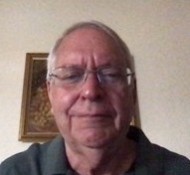
William C. Jackson
USA & Colombia

William C Jackson, MS, MA Fellow HFI. has been involved with healthcare facilities planning, programming, design oversight and project delivery for over 40 years. He has consulted or worked directly for 60 hospitals in national and international settings. He has been associated with 9.0 million square feet of hospital projects put in place; He has worked for design firms (Ellerbe, HDR and Herry), consulting firms, PM firms and academic medical centers (17 years) including Bowman Gray School of Medical at Wake Forest and the Miller School of Medicine at the University of Miami. International work includes seven years of varying roles in the United Arab Emirates working on two 3,0 million square foot hospitals, Turkey, Haiti and Nassau. He is presently semi-retired, living in Medellin, Colombia, and can be reached at bjcamel2012@gmail.com.