

and Delivery of Experiential Retail Urban
Infrastructure in Riyadh’s Mixed-Use
Master Plans
FEATURED PAPER
By Habib Fayadh
Riyadh
Kingdom of Saudi Arabia
Abstract
This paper investigates the transformation of retail from a purely commercial function to a form of urban infrastructure within Saudi Arabia’s Vision 2030. It demonstrates that in Riyadh’s new generation of giga-projects, including Diriyah, Qiddiya, King Salman Park, and the King Abdullah Financial District (KAFD), retail is strategically deployed as soft infrastructure to achieve economic goals: fostering social cohesion, mediating extreme climate, enhancing pedestrian mobility, and constructing a new national-cultural identity. Through a multi-method analysis synthesizing urban theory, spatial policy, experience design (XD) frameworks, project management (PM) methodologies, and document analysis of masterplans and sustainability reports, this research argues that Riyadh represents a distinct model of the “experiential turn.” Findings reveal retail’s dual role in climate adaptation and cultural branding but also highlight delivery challenges. The paper foregrounds the critical role of hybrid PM methodologies in enabling these outcomes and proposes a new Holistic Experiential Retail Infrastructure Model (HERIM). Riyadh’s master-planned retail ecosystems are not merely market responses but instruments executing a national urban vision, offering a potent case study of retail’s role in 21st-century city-making within rapid-development contexts.
Keywords: Experiential Retail, Urban Infrastructure, Vision 2030, Riyadh, Mixed-Use Development, Public Space, Customer Experience (CX) Design, Mega-Projects, Soft Infrastructure, Retail Resilience, Project Management Methodologies,
- Introduction
The 21st century has witnessed a global “experiential turn” in retail, a strategic move from just a transactional space to curated destination in response to e-commerce and shifting consumer desires for meaning and community (Pine & Gilmore, 1999). Concurrently, urban scholarship has begun to reconceptualize retail environments as “soft” or “social” infrastructure—spaces that perform essential civic functions beyond commerce, facilitating interaction, identity formation, and urban vitality (Kärrholm, 2018).
In Riyadh, these global trends converge with unprecedented force and specificity under Vision 2030, the nation’s transformative socio-economic blueprint launched in 2016 to diversify the economy, reduce oil dependency, and enhance quality of life (Kingdom of Saudi Arabia, 2016). Vision 2030 explicitly links urban form to goals of economic diversification, tourism growth, and enhanced livability, catalyzing an array of multi-billion-dollar “giga-projects” that integrate retail as a core component (Zaidan & Abulibdeh, 2021). This paper contends that within these projects—Diriyah, Qiddiya, King Salman Park, KAFD, The Avenues, and Jawharat Alriyadh—retail is engineered as primary urban infrastructure. It serves as a spatial tool for: (1) creating walkable, climate-resilient public realms in a car-dependent metropolis; (2) synthesizing heritage narratives with futuristic ambitions; (3) attracting domestic and international tourism; (4) enhancing the national economic growth; and (5) generating the “vibrant society” central to the national vision.
This research addresses a persistent gap in the literature, which often frames Gulf urbanism as exceptional or spectacular (Elsheshtawy, 2019), by offering a systematic, theoretically grounded analysis of retail-led urban production in Riyadh. Drawing on sources such as The Architectural Newspaper’s (2026) analysis of Diriyah and recent ESG reports, it poses the following questions: How is retail conceptualized, planned, and designed to function as infrastructure? What are the implications for public space, social interaction, and long-term urban resilience?
More…
To read entire paper, click here
How to cite this paper: Fayadh, H. (2026). Project Management Role in Development and Delivery of Experiential Retail Urban Infrastructure in Riyadh’s Mixed-Use Master Plans; PM World Journal, Vol. XV, Issue VI, June. Available online at https://pmworldjournal.com/wp-content/uploads/2026/06/pmwj165-Jun2026-Fayadh-PM-role-in-experiential-retail-infrastructure-in-Riyadh.pdf
About the Author
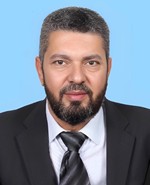
Habib Fayadh
Riyadh, Saudi Arabia

Habib Fayadh is a real estate Expert. With over 25 years of experience in construction, PPP and real estate development, he has served as Vice president, PMO director, project director and delivery director in real estate development, PPP and construction industries. He managed the complete lifecycle of several real estate development projects (initiation, due diligence, feasibility, design, procurement, construction and handing over) in hospitality, retail, commercial and housing. He also served as construction manager for the construction of several hi-tech projects including oil and gas, x-ray inspection systems, hospitality, theme parks and retails. He is also a licensed engineer in Saudi Arabia.
Habib assists real estate development, engineering and construction organizations, as a Subject Matter Expert, to achieve their strategic business objectives, by providing analysis, managerial and methodological proposals that could allow organization complete their projects on time within budgets and at the expected quality. He established and managed 3 PMOs for real estate development organizations in Saudi Arabia, integrating project management methodologies and tools in the business operations.
Mr. Fayadh holds a bachelor’s degree in civil engineering and a Master of Science degree in Construction Engineering and Management from King Fahd University of Petroleum and Minerals, Dhahran, Saudi Arabia. He earned the PMP certification in 1990. He is the author of:
-
- “Building Construction Detailed Estimating Practices in Saudi Arabia” a technical paper published in ASCE journal.
- “Factors Affecting the Decision to Invest in New Hotel Property Development in Saudi Arabia” in the Journal of Hotel and Business Management.
- “A Guest Experience Design Framework for the Saudi Hotel Sector” in the International Journal of Business and Management.
- “Hotel Property Development Model for the Saudi Hospitality Sector” in the International Journal of Business and Management.
- “Implementation Model of Project Management Office in Real Estate Development” in the PM World Journal.
Habib Fayadh can be contacted at fayadhh@gmail.com
LinkedIn: https://www.linkedin.com/in/habib-fayadh-30a58822/