

A Return to Personal Responsibility
FEATURED PAPER
By Dr Colin Darrington Prince
Johannesburg, South Africa
Abstract
This paper examines the professionalisation of project management as a movement away from command-and-control practices toward individual accountability and professional judgement. It argues that modern project environments require ethical responsibility, self-management, and continuous development rather than increased bureaucratic oversight. Professionalisation is presented as a return of responsibility to the project manager and a necessary step in the evolution of project management as a recognised profession.
Keywords: Project Management Professionalisation, Professional Responsibility, Ethics in Project Management, Project Governance, Command and Control, Professional Judgement, Self-management, Continuous Professional Development, Project Management Competence, Project Management Profession
- Introduction
For many years, project management has been associated with a structured environment characterised by detailed planning, strong oversight, and clearly defined reporting lines. This approach emerged naturally from large infrastructure and engineering programmes where predictability and compliance were essential. In such environments, success was often equated with tight control and disciplined execution.
While these practices remain important, the continued reliance on rigid control structures is increasingly difficult to reconcile with the realities of modern project environments. Projects today operate in conditions marked by uncertainty, rapid change, and complex stakeholder relationships. In this context, professionalisation of project management should not be understood as an attempt to strengthen bureaucratic oversight. Rather, it represents a shift toward greater responsibility resting with the individual practitioner.
Professionalisation, in essence, restores accountability to the project manager.
- From Supervision to Professional Judgement
Traditional management thinking often assumed that people needed close supervision in order to perform effectively. Douglas McGregor described this perspective in his well-known Theory X model, which assumes that employees must be directed and monitored to ensure satisfactory performance. Elements of this thinking remain visible in many project environments through extensive reporting requirements, rigid procedures, and layers of approval.
More…
To read entire paper, click here
How to cite this work: Prince, C. D. (2026). Professionalisation of Project Management: A Return to Personal Responsibility, PM World Journal. Vol. XV, Issue IV, April. Available online at https://pmworldjournal.com/wp-content/uploads/2026/04/pmwj163-Apr2026-Prince-Professionalisation-of-Project-Management.pdf
About the Author
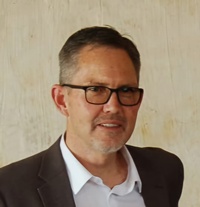
Dr. Collin Darrington Prince
Johannesburg, South Africa

Dr Colin Darrington Prince is a business and IT executive with more than 35 years of cross-sector experience. He is the Chief Executive Officer of Project Management South Africa (PMSA) and formerly served as COO/CFO of the BLOODSA Foundation NPC, advancing haematology care and research across Africa. As Managing Director of Living Water Business Strategies, he provides strategic leadership and business coaching to SMEs. Dr Prince holds a Master of Commerce in Project Management and a Doctor of Technology in Information Technology, combining academic insight with practical expertise in leadership, governance, and organisational transformation. He can be contacted at ceo@projectmanagement.org.za