


for Storage Tank Facility Materials Using
Random Forest: Benchmarking Against Gold Price
Escalation and Parametric Estimating Model
FEATURED PAPER
By Agung Sugiyatno
Jakarta, Indonesia
ABSTRACT
The growing demand for refined fuels and LPG in Indonesia is influencing future investment decisions in downstream storage infrastructure, particularly storage tank facilities. Since the steel plate is one of the major material cost drivers in the construction, repair, and reconstruction of atmospheric storage tanks, improving the reliability of material cost predictions is important for budgeting, procurement planning, and investment evaluation. This paper introduces a cost prediction methodology based on machine learning using Random Forest regression, and compares it to Gold Price escalation and conservative parametric estimating models. The study is based on historical data of vendor quotations for ASTM A283 Grade C steel plate from 2020 to 2026, supported by feature-engineered technical, market, and geopolitical variables. The analysis employs parametric modelling, Gold Price Escalation, and Random Forest regression to evaluate predictive accuracy and practical applicability. The results are intended to answer whether Random Forest regression is more accurate, whether feature-engineered variables improve model performance, and whether the resulting model is useful and defensible for applied cost engineering practice.
Keywords: Machine Learning, Cost Prediction, Random Forest, Parametric Modelling, Gold Price
INTRODUCTION
- National Oil Company Demand Outlook as a Strategic Driver for Storage Tank Facility Investment
Pertamina stated that, “Indonesia’s projected demand for refined fuels and LPG will increase pressure on downstream logistics and storage over the next decade. The National Oil Company projects gasoline demand to rise from 37.15 to 43.82 million kL/year, with a CAGR of 1.85% from 2025 to 2034. Gasoil demand will increase from 32.09 to 39.99 million kL/year at a CAGR of 2.49%. Avtur records the strongest growth at 5.02%, increasing from 3.16 to 4.90 million kL/year. Growth rates differ by product, but the message is clear: Indonesia must expand product-handling, buffering, and storage to support future energy needs.”[1]
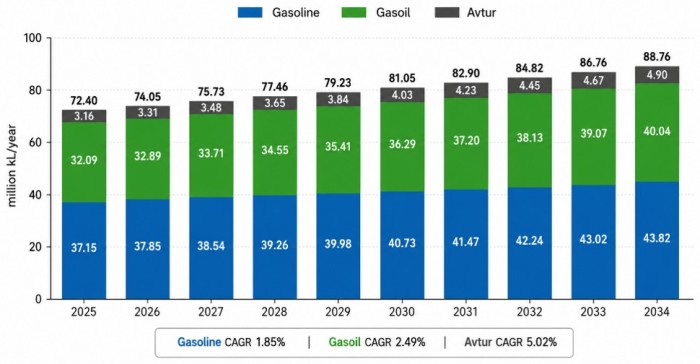
Figure 1. National Oil Company Demand Forecast Data, 2025-2034[2]
Ichsan stated in the paper that, “Pertamina’s continuing dominance despite new market arrangements has been due to two factors. First, in the non-urban areas, with extensive infrastructure, from refineries, storage facilities, to fueling stations, in place at the Time of liberalization, Pertamina has benefited from economies of scale. Effective competition has been difficult, especially outside cities where financial risks are higher. Second, in urban areas such as Java and Bali, Pertamina has been the only company permitted to sell subsidized fuels.”[3]
This forecast has direct implications for projects involving storage tank facilities. As fuel demand grows, so does the pressure on our infrastructure, requiring more storage capacity, greater operational flexibility, tighter inventory controls, and better terminal and depot reliability. Thus, future requirements will need investments in tank farms, storage tanks, pumps, loading systems, piping, and safety facilities. From a cost engineering standpoint, increasing demand provides a more strategic basis for investment prioritization and for improving forecasts of storage infrastructure.
More…
To read entire paper, click here
Author’s note: This paper was originally prepared during a 6-month long Graduate-Level Competency Development/Capacity Building Program developed by PT Mitrata Citragraha and led by Dr. Paul D. Giammalvo to prepare candidates for AACE CCP or other Certifications. https://build-project-management-competency.com/our-faqs/
How to cite this paper: Sugiyatno, A. (2026). Machine Learning–Based Cost Prediction for Storage Tank Facility Materials Using Random Forest: Benchmarking Against Gold Price Escalation and Parametric Estimating Model; PM World Journal, Vol. XV, Issue X, October. Available online at https://pmworldjournal.com/wp-content/uploads/2026/10/pmwj169-Oct2026-Sugiyatno-Machine-Learning-based-Cost-Prediction.pdf
About the Author

Agung Sugiyatno
Jakarta, Indonesia

Agung Sugiyatno is an engineer with nine years of professional experience in the oil and gas sector, particularly in downstream facilities and infrastructure projects. He currently works as a facilities engineer at Indonesia’s national oil company, where he has been involved in various projects, including LPG facilities, fuel terminals, fuel terminal jetties, SPM/CBM facilities, and other downstream oil and gas developments. He holds both a Bachelor’s and a Master’s degree in Civil Engineering from Gunadarma University. To further strengthen his professional competence in cost engineering and project controls, he is currently attending a distance learning mentoring program under the tutelage of Dr. Paul D. Giammalvo, CDT, CCE, MScPM, MRICS, GPM-m, Senior Technical Advisor at PT Mitrata Citragraha, as part of his preparation to attain the Certified Cost Professional certification from AACE International.
Agung Sugiyatno lives in Jakarta, Indonesia, and can be contacted at: agungsugiyatno@gmail.com
[1] Pertamina Patra Niaga. (2024). Infrastructure Masterplan PT. Pertamina Patra Niaga (2025-2034)
[2] Pertamina Patra Niaga. (2024). Infrastructure Masterplan PT. Pertamina Patra Niaga (2025-2034)
[3] Ichsan, M., Lockwood, M., & Ramadhani, M. (2022). National oil companies and fossil fuel subsidy regimes in transition: The case of Indonesia, 2214(790), 4. https://doi.org/10.1016/j.exis.2022.101104