

REPORT
By Sebastian Wieschowski
Nuremberg, Germany
Complexity as a Strength: Why Project Management
Needs More Than Planning
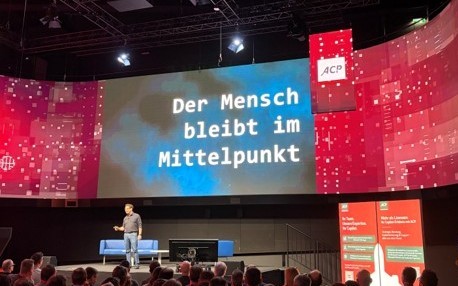
Image 1: “People remain at the center”: Thomas Pisar speaks about the power of complexity in projects. Copyright: Markus Kautsch
INTRODUCTION
Complexity is often viewed in project management as a disruptive force. It is seen as the factor that makes planning more difficult, renders forecasts less reliable, and pushes control mechanisms to their limits. In many organizations, the instinctive response is straightforward: more analysis, more planning, and more control. Yet this is precisely where a fundamental misunderstanding lies. Complexity is not simply an intensified form of complication. It follows an entirely different logic. Those who treat complex situations as though they were merely complicated problems do not increase their ability to manage them—they create an illusion of certainty.
Thomas Pisar is a speaker at the PM Forum, Germany’s leading professional conference for project management, which will take place in Munich on October 8–9, 2026. His central premise is that complexity should not be feared. Instead, it can be used productively—provided that project leaders recognize when traditional planning is appropriate and when different approaches are required. In doing so, Pisar addresses one of the defining challenges of modern project work. Today’s projects are increasingly carried out in environments that are neither stable nor fully predictable. Technological change, organizational interdependencies, regulatory uncertainty, societal expectations, and human behavior all interact with one another. It is precisely at these intersections that complexity emerges.
COMPLICATED IS NOT THE SAME AS COMPLEX
The distinction between complicated and complex is far more than a matter of terminology. Complicated systems may be highly sophisticated, but they remain fundamentally analyzable. A Swiss mechanical watch, a technical installation, or a cost analysis within an IT landscape may require extensive expertise. Even so, each can be broken down, examined, understood, and reassembled. Cause-and-effect relationships are, in principle, traceable. There are established rules, expert knowledge, models, and proven methodologies.
Complex systems differ in a fundamental way. Here, the relationship between cause and effect cannot be clearly determined in advance. Patterns often become visible only in retrospect. A difficult conversation, an organizational transformation, a multi-stakeholder change initiative, or an innovation project cannot be calculated in its entirety. Such situations involve too many degrees of freedom, too many interactions, and too many possible paths of development. Echoing Søren Kierkegaard’s famous observation, Pisar summarizes the idea as follows: in situations like these, life can only be understood backward—but it must be lived forward.
More…
To read entire report, click here
How to cite this paper: Wieschowski, S. (2026). Complexity as a Strength: Why Project Management Needs More Than Planning, report; PM World Journal, Vol. XV, Issue VII, July. Available online at: https://pmworldjournal.com/wp-content/uploads/2026/07/pmwj166-Jul2026-Wieschowski-complexity-as-strength-report.pdf
About the Author
Sebastian Wieschowski
Nuremberg, Germany

Sebastian Wieschowski is an editor at the German Project Management Association (GPM), the national member association of the International Project Management Association (IPMA) in Germany. He is responsible for developing GPM’s media relations and serves on the editorial board of PM Aktuell, a quarterly magazine distributed to more than 6,500 GPM members as well as external stakeholders.
Born in 1985 in northern Germany, Wieschowski developed an early fascination with journalism. His formal education began with active contributions to school and local newspapers. He later completed journalistic training at the Cologne Journalism School for Politics and Economics, earned a Master Level Diploma from the School of Journalism at Eichstaett University, and undertook professional training at a regional newspaper publisher. He also holds a postgraduate M.Sc. degree in Public Health from Hannover Medical School.
In addition to his freelance journalism for national and international outlets, including major German media such as DIE ZEIT, Wieschowski has held senior communications roles since 2012. He first worked as press officer for a private university specializing in social work, then for a psychiatric hospital, and later for an industrial company. In September 2024, he joined GPM’s Marketing and Public Relations department, where he focuses on strengthening the visibility and public relevance of project management through editorial formats such as storytelling.
Alongside his professional career, Sebastian Wieschowski is also active as a freelance author in his lifelong passion, numismatics. He writes for both German- and English-language specialist publications, and his work has been recognized three times by the Numismatic Literary Guild, a writers’ association based in the USA.
Sebastian is a reporter at heart and enjoys discovering inspiring stories and meet people from around the world, a goal that is particularly easy to pursue in the field of project management. He can be contacted at s.wieschowski@gpm-ipma.de.
To view other works by Sebastian, visit his author showcase in the PM World Library at https://pmworldlibrary.net/authors/sebastian-wieschowski/