

Ethics as Leadership Infrastructure
A Special Edition on the Chief Project Officer Role
Interview with Ming Yeung
Adjunct Professor
Portfolio Manager & Program Director
Project Delivery & Product Owner
Finance and Governance Professional
Toronto, Ontario, Canada
by Aina Aliieva (Alive)
International Correspondent, PM World Journal
Toronto, Ontario, Canada
Introduction to Interviewee
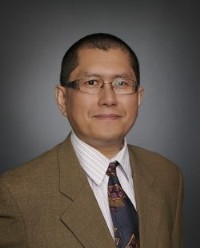
Ming Yeung is a passionate educator and a seasoned professional in project planning, execution, and control. He is a Compliance Manager (contract) and an Acting CCO/CRO with a fintech crypto blockchain startup where he co-manages its public listing on Canadian Securities Exchange since August 2022 and a part-time adjunct professor with several academic institutions since April 2024. With over 20 years of progressive experience in the financial industry, Ming commenced his career as an analyst with two major banks in Toronto and progressed into senior management roles by two multinational insurers in Hong Kong and Singapore where he offered risk advisory, compliance oversight, program directorship, project delivery, and product ownership, and portfolio management.
Ming had many successful academic endeavours where he received his Bachelors from University of Toronto and Brock University and Masters from Dalhousie University and Osgoode Hall Law School. As a fervent believer in lifelong learning and continuous improvement, he also acquired many professional designations, such as CFA, FRM, PMP, FCSI, AICB, CSM, CSPO, PFP, PTS, FMA, and CIM et cetera. He is a frequent contributor on the topics of ethics and ethical behaviours at PMI Ethics Bistro and Project Management Central sites. 2 He can be contacted at bl292@hotmail.com.
Introduction to Interview
This interview serves as a special edition and companion to the book The Evolution of the PMO: Rise of the Chief Project Officer.
In the book, we explored the emergence of the Chief Project Officer role through multiple lenses — organizational complexity, historical evolution of the PMO, structural challenges, leadership trends, the impact of artificial intelligence, and the future trajectory of the profession. The focus was intentionally broad and forward-looking, aimed at positioning the CPO as a strategic executive role rather than an operational extension of project delivery.
In doing so, however, we overlooked a topic that is both foundational and unavoidable: ethics.
Ethics sits beneath every decision architecture, governance model, and leadership structure we described — yet it was not explicitly examined in the publication. Ming Yeung, a member of PMI’s Global Ethics Advisory Team (formerly Ethics Insight Team), rightly pointed this out during our conversations. Unfortunately, by that time, the manuscript had already progressed beyond the point where substantive changes could be made.
Rather than treating this as a footnote or a post-publication correction, I chose a different approach.
This interview and accompanying article are intended to function as a special edition — not as an addendum, but as a deliberate continuation of the conversation. While it could not be included in the book, it addresses a dimension of leadership and governance that deserves focused attention, particularly as organizations accelerate technologically and structurally.
Ethics is not a peripheral concern for Chief Project Officers, project leaders, or executives. It shapes how power is exercised, how technology is used, how decisions are justified, and how trust is sustained under pressure. In many ways, it is the quiet infrastructure that determines whether systems hold — or fail — over time.
This conversation with Ming Yeung is therefore not a retrospective fix, but a necessary extension. It explores ethics not as compliance, but as professional competence, leadership responsibility, and systemic design — precisely the dimensions that define the modern Chief Project Officer role.
Introduction
Q1. Revisiting ethics in light of rapid technological change. Given the rapid advancements in technology and evolving organizational structures discussed in your article on the Ernst & Young case, how do you recommend professionals and organizations adapt their ethical frameworks to stay relevant and maintain integrity?
Ming: That’s an excellent starting point. By way of background, I’m a certified PMP and a member of PMI’s Global Ethics Advisory Team (formerly Ethics Insight Team). Our mandate is to promote awareness, effectiveness, and ethical practice across the entire project management community — from students and candidates to certified professionals and volunteers.
One of our initiatives is the Ethics Bistro, where we publish monthly articles on emerging ethical issues using real-world cases and storytelling. The Ernst & Young case you referenced is a strong example. In that situation, some employees attempted to shortcut mandatory continuing education by running multiple training sessions simultaneously on different devices. While technologically possible, it clearly violated professional and ethical expectations.
This case highlights why organizations must actively revisit ethics in light of technological advancement. I recommend five key actions:
More…
To read entire interview, click here
How to cite this work: Aliieva, A. (2026). Ethics as Leadership Infrastructure: A Special Edition on the Chief Project Officer Role, Interview with Ming Yeung, PM World Journal, Vol. XV, Issue I, January. Available online at: https://pmworldjournal.com/wp-content/uploads/2026/02/pmwj161-Feb2026-Aliieva-Ethics-Interview-with-Ming-Yeung-Interview.pdf
About the Interviewer

Aina Aliieva
Toronto, Ontario, Canada

Aina Aliieva (Alive) is an experienced Agile Coach and a Business Consultant with 20 years of experience in different industries, from hospitality and tourism to banking and engineering, a Founder & CEO at Bee Agile and a CEO & VP of Marketing at The PMO Strategy and Execution Hub.
She is a keynote speaker on Agile, Project Management, Negotiation, People Management, and Soft Skills topics. She was a guest instructor at NASA in 2022 & 2023 with topics on Conflict Resolution & Negotiation and Facilitation Techniques.
Her book, “It Starts with YOU. 40 Letters to My Younger Self on How to Get Going in Your Career,” hit the #1 position in the #jobhunting category on Amazon and is featured in a Forbes Councils Executive Library.
She also contributed to the books “Mastering Solution Delivery: Practical Insights and Lessons from Thought Leaders in a Post-Pandemic Era”, “Green PMO: Sustainability through Project Management Lens” and “Agile Coaching and Transformation: The Journey to Enterprise Agility”.
Aina was also a Finalist in the Immigrant Entrepreneur of the Year category in 2021 by the Canadian SME National Business Award
She can be contacted at https://www.linkedin.com/in/aina-aliieva/
To view previous interviews and other works by Aina, visit her author showcase in the PM World Library at https://pmworldlibrary.net/authors/aina-aliieva/
[2] ProjectManagement.com – Falsified by AI, Rectified by Ethics: Project Managers at the Crossroads; https://www.projectmanagement.com/blog-post/79206/falsified-by-ai–rectified-by-ethics–project-managers-at-the-crossroads