

Float Mapping in Practice: Managing Time,
Risk and Alignment
Interview with Massimoluigi Casinelli
International Expert Consultant
Project Planning & Control
Engineering & Construction Industry
Rome, Italy
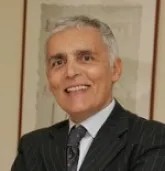
by Aina Aliieva (Alive)
International Correspondent, PM World Journal
Toronto, Ontario, Canada
Introduction to Interviewee
Massimoluigi Casinelli, CCP is a senior consultant in project planning and controls with over 30 years of experience supporting international engineering and construction companies on complex infrastructure projects. His expertise covers highways, railways, civil and industrial buildings, air terminals, hospitals, and specific contributions in the energy sector. He specializes in setting up and implementing project management systems to measure costs, progress, and performance, mitigate delays, and support claims and risk mitigation. He is the author of international publications, including articles in the Cost Engineering Journal (on schedule delays and concurrent delay analysis) and in the PM World Journal (on EVM performance evaluation in complex projects). He can be contacted at m.casinelli@casinelli.net
Introduction to Interview
When I first came across Massimoluigi Casinelli’s article Float Mapping: An Effective Tool to Optimize Project Planning, Scheduling, and Risk Assessment in the PM World Journal, I stopped reading as a casual observer and leaned in as a practitioner. It is rare to find a case study of this depth — most publications lean on theory, but this one was grounded in the gritty reality of a €6B metro project, where every delay carried penalties counted in hundreds of thousands per day.
The concept of float mapping immediately struck me as more than a scheduling exercise. Float mapping is the process of identifying and visualizing how float — the time buffer between activities — is distributed across a project schedule. In practice, it means looking beyond a single critical path to see the full picture: which milestones have no room for slippage, which have a few days of tolerance, and which carry flexibility. By categorizing paths into levels of criticality, float mapping turns float from a hidden number in a CPM calculation into a visible, structured resource.
Why is this powerful? Because projects rarely run as planned. Float values shift as work progresses, and delays often appear first on sub-critical paths. Float mapping allows leaders to anticipate these shifts, focus resources where they matter most, and keep contractors, owners, and stakeholders aligned around the same priorities. It makes the invisible visible — revealing where time is fragile, where there is room to maneuver, and how today’s decisions shape tomorrow’s milestones.
I reached out to Massimo, and what started as an exchange of ideas turned into a collaboration: first a joint webinar, then a series of follow-up questions where we explored both the technical and leadership dimensions of the framework.
What follows is that conversation — an interview blending Massimo’s decades of experience on international infrastructure projects with the questions many of us face as project leaders: How do you keep control when complexity multiplies? How do you adapt frameworks born from mega-projects to smaller initiatives? And what does it take to make the schedule the true backbone of decision-making?
Q1. To start, could you describe the metro project overall — its scope, scale, and what it demanded in terms of people and organization?
Massimo: My involvement was during the tender stage, where I supported the joint venture in preparing the technical offer and project plan. The project itself was a €6B metro line — a massive seven-year program that included underground stations and tunnels, as well as elevated bridges and viaducts. At peak, the workforce was expected to exceed 5,000 people, with thousands more involved indirectly through subcontractors and suppliers.
From an organizational perspective, the contractor’s full project management structure could surpass 300 professionals, while the Owner’s team might reach about 100. In many cases, the Owner also appoints a Project Management Consultant (PMC), which adds another 20 or so specialists. This depends on the specific project management assistance model adopted by the Owner, as in some cases the PMC is in charge of the entire spectrum of project management activities.
Within the joint venture, the core management team typically comprised about 25–30 key roles, supported by experts in supervision, quality control, quantity surveying, planning and scheduling, cost control, BIM, document management, design, and procurement. Critical subcontractors were also involved early in the tender analysis to validate the schedule and ensure execution strategies were realistic. Altogether, combining management, subcontractors, and laborers, the project easily mobilized several thousand people at its peak.
More…
To read entire interview, click here
How to cite this work: Aliieva, A. (2026). Float Mapping in Practice: Managing Time, Risk and Alignment, Interview with Massimoluigi Casinelli, PM World Journal, Vol. XV, Issue I, January. Available online at: https://pmworldjournal.com/wp-content/uploads/2026/01/pmwj160-2026-Aliieva-Float-Mapping-Interview-with-Massimoluigi-Casinelli.pdf
About the Interviewer
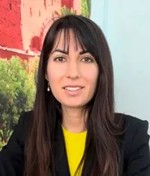
Aina Aliieva
Toronto, Ontario, Canada

Aina Aliieva (Alive) is an experienced Agile Coach and a Business Consultant with 20 years of experience in different industries, from hospitality and tourism to banking and engineering, a Founder & CEO at Bee Agile and a CEO & VP of Marketing at The PMO Strategy and Execution Hub.
She is a keynote speaker on Agile, Project Management, Negotiation, People Management, and Soft Skills topics. She was a guest instructor at NASA in 2022 & 2023 with topics on Conflict Resolution & Negotiation and Facilitation Techniques.
Her book, “It Starts with YOU. 40 Letters to My Younger Self on How to Get Going in Your Career,” hit the #1 position in the #jobhunting category on Amazon and is featured in a Forbes Councils Executive Library.
She also contributed to the books “Mastering Solution Delivery: Practical Insights and Lessons from Thought Leaders in a Post-Pandemic Era”, “Green PMO: Sustainability through Project Management Lens” and “Agile Coaching and Transformation: The Journey to Enterprise Agility”.
Aina was also a Finalist in the Immigrant Entrepreneur of the Year category in 2021 by the Canadian SME National Business Award
She can be contacted at https://www.linkedin.com/in/aina-aliieva/
To view previous interviews and other works by Aina, visit her author showcase in the PM World Library at https://pmworldlibrary.net/authors/aina-aliieva/