


Cognitive Foundations for Recognizing Strategic
Value in Project Management Offices
FEATURED PAPER
By Dr. Tony Prensa
Florida, USA
Executive Summary
Project Management Offices (PMOs) have become standard organizational entities in many institutions, serving as a central mechanism for coordinating projects, programs, and portfolios. As strategy execution has grown more complex, especially with the acceleration of technological disruption, the rise of artificial intelligence, and the demands of enterprise-wide change, organizations have increasingly relied on structured governance to maintain alignment and control. Over the past two decades, that reliance has expanded as organizations have sought more formal ways to manage digital transformation initiatives, strategy execution, and enterprise change programs.
Industry research indicates that a substantial majority of medium and large organizations operate some form of PMO capability. Studies conducted by global consulting firms suggest that between 80% and 90% of large organizations have implemented centralized project governance structures, typically embodied in a PMO.
Yet adoption has not translated into consistent recognition of strategic value. Many PMOs continue to struggle to be seen as contributors to enterprise value, despite their formal role in governance and delivery.
Part of the issue lies in how PMO effectiveness has traditionally been assessed. Common metrics, such as project success rates, schedule adherence, compliance with governance processes, and reporting accuracy, provide a useful view of operational discipline. However, they reveal little about how executive leaders interpret the PMO’s contribution at a strategic level.
This article takes a different position. The challenge is not primarily structural or operational; it is cognitive. Executives do not evaluate the PMO on metrics alone. Their judgments are shaped by where they place attention, how they assign causality, and how they make sense of organizational performance through narrative.
From this perspective, PMO value is not simply demonstrated; it is interpreted. Recognition depends as much on perception as it does on performance.
To explore this dynamic, the article introduces the PMO Value Perception Model, which identifies four domains that shape how executives recognize PMO value:
-
- Salience
- Attribution
- Narrative Coherence
- Emotional Confidence
Understanding these mechanisms provides PMO leaders with a more practical way to strengthen both the strategic recognition and legitimacy of the PMO.
More…
To read entire paper, click here
How to cite this paper: Prensa, T. (2026). Executive Perceptions and PMO Influence: Cognitive Foundations for Recognizing Strategic Value in Project Management Offices; PM World Journal, Vol. XV, Issue IV, April. Available online at https://pmworldjournal.com/wp-content/uploads/2026/04/pmwj163-Apr2026-Prensa-Executive-Perceptions-and-PMO-Influence.pdf
About the Author
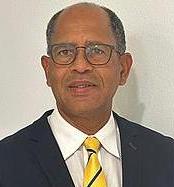
Dr. Tony Prensa
Florida, USA

Dr. Tony Prensa is a PMO strategist, executive advisor, author, and keynote speaker whose work focuses on strategy execution, governance design, PMO transformation, and enterprise value delivery.
He is the author of Digital Project Playbook and the creator of PMO Value Architecture™ and the Blueprint360™ PMO Operating Model, frameworks developed to help organizations align strategy, governance, portfolio execution, and value realization in ways that support measurable business outcomes.
Dr. Prensa is the Founder and CEO of TP Global Business Consulting, where he advises organizations across industries on modernizing PMO operating models, strengthening governance systems, improving decision-making, and increasing executive confidence in PMO leadership.
Through keynote presentations, masterclasses, executive briefings, and published work, he continues to contribute to the advancement of the PMO profession, with particular emphasis on the relationship between strategy execution, governance design, and organizational value creation.
He can be contacted at tony@tpglobalbusinessconsulting.com.