

A Literature Review
FEATURED PAPER
By Lim Yiiliang, Shi Yee Wong, Fock-Kui Kan
School of Built Environment
University of Technology Sarawak
Malaysia
Abstract
Lean Construction (LC) has evolved from manufacturing production philosophy into a project delivery paradigm toward waste elimination and value generation. While a substantial body of research affirms that LC delivers measurable benefits, these benefits are frequently reported under fragmented and inconsistent terminologies, making it difficult for practitioners and researchers to obtain a consolidated view of what LC offers. This paper reviewed the studies published in between 2021 to 2025, on the benefits of LC, drawn from nineteen countries across five continents. Reported benefits were extracted, standardised into unified categories to reconcile divergent terminologies, and organised along three dimensions of the Triple Bottom Line (TBL) namely Social, Environmental and Economic which are further mapped to United Nations Sustainable Development Goals (SDGs). The literatures review identified twenty distinct benefits, with efficiency, productivity, performance improvement, waste reduction, cost and time reduction emerging as the most frequently cited. The findings confirm that LC benefits are mutually reinforcing across the three TBL dimensions rather than confined to operational efficiency, and that LC is increasingly positioned as an enabler for sustainable and resilient construction projects. The consolidated benefit taxonomy offers project management practitioners concise evidence for articulating the value proposition of LC adoption.
Keywords: Lean Construction, Project Performance Improvement, Sustainable Project Management, Value Generation, Stakeholder Collaboration.
- Introduction
Construction industry remains one of the largest contributors to national economies, yet it continues to be characterised by persistent inefficiency, cost and schedule overruns, quality defects and comparatively low productivity growth relative to manufacturing (Fashina et al., 2021; McKinsey & Company, 2024). In response to these systemic challenges, Lean Construction (LC) has emerged as an approach to project delivery that fundamentally reorients toward flow-oriented coordination, waste elimination and value generation throughout the project lifecycle (Koskela, 2000; Koskela et al., 2007). Rather than conceptualising construction as a series of discrete transformations that convert inputs into outputs, LC views construction as a continuous flow of materials, information and work across interconnected processes (Ballard & Howell, 2003; Salem et al., 2006; Salem & Solomon, 2021).
A growing volume of empirical and review-based studies report that the adoption of LC yield substantial benefits, including the reduction of project lifecycle duration and cost, improvements in quality and performance, and higher levels of satisfaction relating to health and safety (Abbas et al., 2024; Aguome et al., 2024; Almabrouk, 2024; Hamaidi et al., 2024; Yaro et al., 2024). However, this evidence is dispersed across a wide range of papers, and the benefits are frequently described using divergent overlapping terminologies. This fragmentation makes it difficult for practitioners to develop a coherent understanding of the value proposition of LC, moreover, the society currently moving towards the sustainability outcome, yet the current studies of LC did not focus on categorising the benefits of LC in par with sustainability-oriented approach.
The purpose of this paper is therefore to consolidate and synthesise the benefits of LC as reported in recent literature, and to organise them within a coherent under the three key pillars of sustainability. Adopting the Triple Bottom Line (TBL) lens, LC benefits are structured along the Social, Environmental and Economic (SEE) dimensions, and are subsequently mapped to the United Nations Sustainable Development Goals (SDGs) in order to situate LC within the broader agenda of sustainable development (Carvajal-Arango et al., 2019; Chen et al., 2024; United Nations, 2020). The paper contributes a consolidated benefit taxonomy that reconciles inconsistent terminologies, quantifies relative prominence of each benefit, and provides project management practitioners and researchers with a concise, evidence-based reference to better understand what LC offers.
More…
To read entire paper, click here
How to cite this work: Lim, Y.L., Wong, S.Y., & Kan, F.-K. (2026). Benefits of Lean Construction (LC) from Literature, PM World Journal, Vol. XV, Issue IX, September. Available online at https://pmworldjournal.com/wp-content/uploads/2026/09/pmwj168-Sep2026-Yiliang-Wong-Kui-Benefits-of-Lean-Construction.pdf
About the Authors

Lim Yiiliang, PMP
Sarawak, Malaysia

Mr. Lim Yiiliang hails from the oil-rich state of Sarawak, Malaysia with over 29 years of experience across Oil & Gas and Construction sector. A certified Project Management Professional (PMP) by Project Management Institute (PMI), he has worked in multiple countries, including Brunei, Germany, Malaysia, Oman, Singapore, UAE and the UK, with leading multinational energy companies such as Shell, Kellogg Brown & Root (KBR), Brunei LNG, ORPIC, OQ, and currently, Petroleum Sarawak (PETROS) as Project Delivery Manager. He is also a PhD researcher majoring in Construction Management, with research focus on Lean Construction. YIILIANG can be contacted at nicewilliam@rocketmail.com

Wong Shi Yee
Sarawak, Malaysia
Dr. Wong Shi Yee is a Senior Lecturer and Postgraduate Programme Coordinator (MSc in Construction Management and PhD in Construction Management) at the School of Built Environment, University of Technology Sarawak (UTS). She holds a PhD in the built environment discipline and has active research interests in Construction Management, Sustainable Development, Green Building, Building Information Modelling (BIM), and Sustainable Housing. Dr. Wong has published extensively in reputable international journals and conferences while actively supervising postgraduate research and collaborating with industry and academia to advance sustainable construction practices.
Fock-Kui Kan
Sarawak, Malaysia
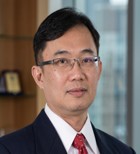
Assoc. Prof. Sr. Dr. Kan Fock Kui is the Dean of the School of Built Environment at the University of Technology Sarawak (UTS). He holds a PhD in Quantity Surveying and is a Professional Quantity Surveyor (PQS), MRICS, and MRISM. With extensive experience in academia and the construction industry, his areas of expertise include Quantity Surveying, Construction Management, Project Management, Construction Procurement, Contract Administration, and Sustainable Construction. Dr. Kan actively contributes to research, postgraduate supervision, and industry collaboration in advancing the built environment profession in Malaysia.