

In Building Projects Procurement in Nigeria
SECOND EDITION
By i Isma’il Umar, ii Musa-Haddary Yakubu Gimson, iii Chindo Peter Gangas and ivAbdullahi Muhammad
i Department of Quantity Surveying
Hussaini Adamu Federal Polytechnic Kazaure
Jigawa State, Nigeria
ii, iii, & iv Department of Quantity Surveying
Ahmadu Bello University Zaria
Kaduna State, Nigeria
Abstract
Corruption in the Construction Industry is referred to the misuse of delegated responsibility by morally depraved professionals for their private gain. This research is intended to identify the most prevalent types of corruption in the construction sector with specific reference to the Nigerian building projects procurement through “Delphi Survey and Nominal Group Technique (NGT)”. Based on an extensive literature review, an initial list of ninety-one (91) corruption risk indicators in public construction projects were established. This list was adopted to serve as the basis for the development of corruption risk indicators specifically in the context of building construction projects procurement in Nigeria via two-round Delphi survey with seven (7) industrial experts and academics; two (2) Quantity Surveyors, two (2) Architects and three (3) Engineers. Similarly, (28) different types of corruption prevalent in the context of construction, engineering, and the procurement sectors were captured from a comprehensive literature review which were further refined into five different constructs was also adapted in the NGT in order to identify the most prevalent types of corruption in the context of building projects procurement in Nigeria and as well to employ in developing the conceptual framework. Collusive practices are the most manifested corrupt practices with 33% at needs assessment stage (NAS), 56% at project design and documentation (PPD), 70% at tendering and contract award stage (TCA), 70% at contract execution stage (CES) and 100% at defect liability and final account stage (DLFA). Collusive practices have overall chance of 68% occurrence in the procurement of building projects in Nigeria. This is followed by bribery-related corrupt practices with 17% at NAS, 33% at PPD, 10% at TCA, 10% at CES and 0% at DLFA with overall 16% likelihood to ensue in the procurement of building projects in Nigeria which mostly initiate by supply side of corruption. The study recommends that the government should integrate anti-corruption measures at all stages of building projects procurement and any contract award within the industry should follow an upright process as outlined in the public procurement Act 2007 among others.
Keywords: Corruption, Building Projects, Construction Industry, Delphi Survey, Nominal Group Technique
1.0 Introduction
Nigeria was classified as the most corrupt country out of 54 countries in a 1996 survey on corruption conducted by Transparency International (TI) and Goettrigen University, with Pakistan coming in second (Moore, 1997). Nigeria was ranked 81st out of 85 countries in a 1978 study by the Transparency International Corruption Perception Index (CPI) (Lip Set and Lenz, 2000). In 2001 Corruption Perception Index (CPI) placed Nigeria 90th out of 91 nations, occupied second position as the most corrupt nation with Bangladesh coming first. Nigeria was ranked 147th out of 179 nations in the 2007 Transparency International Corruption Perception Index (Arowolo, 2018). This is owed to the supposition that the procurement process is the most vulnerable globally, and also the construction industry responsible for executing infrastructure and other related projects is considered as the second most corrupt industry globally (Krishnan 2010; Kottasova2014).
In most developing countries, existing literature and reports reveal how corruption has plagued the public procurement processes, which are also traceable in public construction projects (Zhang, et al., 2022). Olukoyede (2024), economic and financial crime commission (EFCC) chairman advanced that more than ninety percent (90%) of public corruption cases under investigations in Nigeria are tied to procurement processes and according to Ayodele et al. (2010) on bribery and corruption in the Nigerian construction industry, for a particular project the amount ranges from 5% to 15% and sometimes up to 40% of the contract sum is often illegally expended in bribery and other forms of corruption to officials in government offices during contract award, execution and payment processes…
More…
To read entire article, click here
Editor’s note: Second Editions are previously published papers that have continued relevance in today’s project management world, or which were originally published in conference proceedings or in a language other than English. Original publication acknowledged; authors retain copyright. This paper was originally presented at the 1st International Conference, The Quantity Surveyor’s Edge, Department of Quantity Surveying, Enugu State University of Science and Technology, Enugu, Nigeria, 25-26 June 2025. It is republished here with permission of the authors and conference organizers.
How to cite this paper: Umar, I., Gimson, M-H. Y., Gangas, C. P., Muhammad, A., (2025, 2026). An Anatomy of Corruption Patterns In Building Projects Procurement in Nigeria; Originally presented at the 1st International Conference, The Quantity Surveyor’s Edge, Department of Quantity Surveying, Enugu State University of Science and Technology, Enugu, Nigeria, 25-26 June 2025; republished in the PM World Journal, Vol. XV, Issue VIII, August. Available online at https://pmworldjournal.com/wp-content/uploads/2026/08/pmwj167-Aug2026-Umar-et-al-Anatomy-of-Corruption-Paterns.pdf
About the Authors

Isma’il Umar
Jigawa State, Nigeria

Isma’il Umar received his B.Tech. Quantity Surveying from Abubakar Tafawa Balewa University Bauchi state and M.sc Quantity Surveying from Ahmadu Bello University Zaria. He worked with Borini Prono & Co. Nigeria Limited as site Quantity Surveyor and later Transmission Company of Nigeria. He joined Hussaini Adamu Federal Polytechnic, Kazaure as lecturer from 2000 to date. Currently a Chief Lecturer in the Quantity Surveying Department. He has research interest in Procurement of Construction Works, Application of Machine Learning in Construction and Computer Vision in Construction. Isma’il is a Corporate Member, Nigerian Institute of Quantity Surveyors and a Registered Quantity Surveyor with Quantity Surveyors’ Registration Board of Nigeria.

Dr. Musa-Haddary Yakubu Gimson
Kaduna State, Nigeria
Dr. Musa-Haddary Yakubu Gimson is a Professor of Quantity Surveying specializing in cost-value optimization of construction projects. He has mentored dozens of respected scholars in over four decades of lecturing in higher institutions, research efforts; include project management, procurement, risk and value management among others. Prof. Musa-Haddary is a registered Quantity Surveyor.
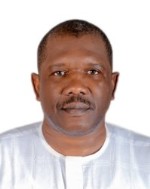
Peter Gangas Chindo, PhD
Kaduna State, Nigeria
Peter Gangas Chindo, PhD is Professor in the Department of Quantity Surveying, Ahmadu Bello University, Zaria, Nigeria. He is currently the Head of the Department and holds a BSc (Hons) in Quantity Surveying, MSc in Construction Management and PhD in Quantity Surveying. He has research interest in Construction Manpower Training and Management, Project Cost Management and Monitoring and Strategic Management of Construction Firms. Prof Chindo is a corporate member of the Nigerian Institute of Quantity Surveyor.

Abdullahi Muhammad, PhD
Kaduna State, Nigeria
Abdullahi Muhammad, PhD is an Associate Professor of Quantity Surveying at Ahmadu Bello University, Zaria. He had his first degree in Quantity Surveying; Masters in Project Management; and PhD in Quantity Surveying, all from Ahmadu Bello University, Zaria. He was at the University of Florida in the year 2017 as a visiting scholar to accomplish the last part of his PhD research that required the use of BIM laboratories and other data schema development tools. He was the Director of Public Procurement Research Centre, Ahmadu Bello University from 2020-2024. Dr. Abdullahi is currently the Deputy Centre Leader for in charge of Procurement Management Programmes at the Sustainable Procurement, Environment & Social Standards Centre of Excellence (a World Bank Sponsored project on capacity development on ‘Public Procurement, Environment & Social Standards’). He has published several articles in reputable journals and has attended many international conferences Dr. Abdullahi is a registered Quantity Surveyor (RQS), corporate member of the Nigerian Institute of Quantity Surveyors (MNIQS) and was privileged to present papers at some NIQS national and state chapters’ workshops across the country.