

What Project Managers Can Learn from Aviation
May 2026 PM Update from Germany
REPORT
By Sebastian Wieschowski
Nuremberg, Germany
Introduction
Projects rarely fail overnight. More often, they drift—quietly, gradually, and almost invisibly—until the gap between plan and reality becomes too large to manage. This underlying dynamic formed the thematic backbone of the first stop of the GPM Summer Tour, where insights from aviation were translated into concrete lessons for project management professionals.
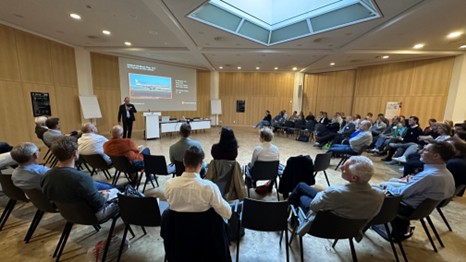
The GPM Summer Tour, organized by the German Project Management Association, is designed as a dialogue-driven format that brings project management directly to practitioners, regional groups, and partner organizations. Rather than focusing on abstract theory, it emphasizes real-world exchange, shared experiences, and practical insights. The goal is to make project management tangible, to connect people, and to surface the challenges and perspectives that emerge in everyday project work.
DRIFT INTO FAILURE – UNDERSTANDING HOW PROJECTS GRADUALLY LOSE CONTROL
The opening presentation by Tim-Felix Anderten focused on the concept of “Drift into Failure,” a phenomenon describing how systems and projects gradually deviate from their intended state without immediate recognition. Rather than dramatic breakdowns, it is often a sequence of small, seemingly harmless adjustments that lead to failure over time.
A key insight is that these deviations are rarely perceived as problematic when they occur. Instead, they are often rationalized as necessary adaptations to real-world constraints such as time pressure or resource limitations. Over time, these adaptations become normalized, effectively redefining what is considered acceptable practice.
Anderten illustrated that this behavior is deeply rooted in human decision-making. Individuals continuously assess risks and adjust their actions accordingly. As long as deviations do not result in negative consequences, they are likely to be repeated—and gradually expanded. This creates a feedback loop in which risk tolerance increases without conscious awareness.
Importantly, drift is not limited to individual behavior. It can also become embedded at the organizational level, where informal practices begin to replace formal rules. In such cases, deviations are no longer exceptions but part of the system itself, making them significantly harder to detect and correct.
For project management, the implication is clear: controlling drift requires active awareness. Regular reflection points, explicit discussions about deviations, and a shared understanding of acceptable risk boundaries are essential. The challenge is not to eliminate drift entirely—this is neither realistic nor desirable—but to recognize and manage it before it becomes critical.
More…
To read entire report, click here
How to cite this paper: Wieschowski, S. (2026). When Small Deviations Become Big Failures – What Project Managers Can Learn from Aviation, May 2026 PM Update from Germany, report; PM World Journal, Vol. XV, Issue V, May. Available online at: https://pmworldjournal.com/wp-content/uploads/2026/05/pmwj164-May2026-Wieschowski-PM-Learn-from-Aviation-report.pdf
About the Author

Sebastian Wieschowski
Nuremberg, Germany

Sebastian Wieschowski is an editor at the German Project Management Association (GPM), the national member association of the International Project Management Association (IPMA) in Germany. He is responsible for developing GPM’s media relations and serves on the editorial board of PM Aktuell, a quarterly magazine distributed to more than 6,500 GPM members as well as external stakeholders.
Born in 1985 in northern Germany, Wieschowski developed an early fascination with journalism. His formal education began with active contributions to school and local newspapers. He later completed journalistic training at the Cologne Journalism School for Politics and Economics, earned a Master Level Diploma from the School of Journalism at Eichstaett University, and undertook professional training at a regional newspaper publisher. He also holds a postgraduate M.Sc. degree in Public Health from Hannover Medical School.
In addition to his freelance journalism for national and international outlets, including major German media such as DIE ZEIT, Wieschowski has held senior communications roles since 2012. He first worked as press officer for a private university specializing in social work, then for a psychiatric hospital, and later for an industrial company. In September 2024, he joined GPM’s Marketing and Public Relations department, where he focuses on strengthening the visibility and public relevance of project management through editorial formats such as storytelling.
Alongside his professional career, Sebastian Wieschowski is also active as a freelance author in his lifelong passion, numismatics. He writes for both German- and English-language specialist publications, and his work has been recognized three times by the Numismatic Literary Guild, a writers’ association based in the USA.
Sebastian is a reporter at heart and enjoys discovering inspiring stories and meet people from around the world, a goal that is particularly easy to pursue in the field of project management. He can be contacted at s.wieschowski@gpm-ipma.de.
To view other works by Sebastian, visit his author showcase in the PM World Library at https://pmworldlibrary.net/authors/sebastian-wieschowski/