

Jeff Sutherland on the Future of Scrum
REPORT
By Sebastian Wieschowski
Nuremberg, Germany
How does artificial intelligence change the way agile teams work when AI agents no longer merely assist but take on tasks independently? At the third PM Summit NRW in Bochum, Scrum co-creator Dr. Jeff Sutherland painted a far-reaching picture of how humans and machines will work together in the future. His central argument: AI will not make Scrum obsolete. On the contrary, clear priorities, verifiable results, and a consistent focus on value will matter more than ever.
At the close of the third PM Summit NRW on September 18, 2026, Sutherland shared experiences from companies where AI agents already operate largely on their own. His goal goes well beyond today’s widespread use of chatbots and AI assistants. In his vision, AI should become a regular member of the Scrum team: agents draw from the same backlog as human developers, take on tasks, and deliver results that can then be reviewed.
Sutherland links this vision to ambitious productivity goals. For every story point completed through human work, he envisions ten more being completed by autonomous AI agents. In his own companies and in teams he works with, he is therefore testing methods to track work done by people, work done autonomously by AI, and work done jointly by people and AI as separate categories. What matters, he argues, is not how quickly a task is performed, but whether it has actually been completed in full and makes a verifiable contribution.
That does not mean, Sutherland explicitly argues, that AI will make human teams redundant. Rather, he sees the technology as an amplifier of human capabilities. Teams must learn to structure tasks so agents can handle them independently. At the same time, people must be able to judge which work is worth doing in the first place. That skill in particular could significantly increase a team’s value: the person in greatest demand in the future will not be the one who completes as many tasks as possible alone, but the one who can bring human and machine capabilities together productively.
The Product Owner plays a key role here. Speed alone does not create economic value. In the discussion following his talk, Sutherland emphasized that value must be built into the backlog from the outset. The Product Owner must make sure it prioritizes tasks that, for example, increase revenue or profitability or strengthen the organization’s market position. Story points and AI token consumption are not, in themselves, measures of value. What matters is the outcome for the organization.
The role of the Scrum Master is also changing, in Sutherland’s view. As agents increasingly handle tasks autonomously, designing workflows and removing obstacles become even more central. When AI substantially accelerates individual steps, bottlenecks that were previously less visible come into focus: Is the backlog sufficiently prepared? Are requirements clearly defined? Can decisions be made quickly? And can completed work actually be put to use without lengthy approval processes?
More…
To read entire report, click here
How to cite this paper: Wieschowski, S. (2026). When AI Becomes a Team Member: Jeff Sutherland on the Future of Scrum. Report; PM World Journal, Vol. XV, Issue X, October. Available online at: https://pmworldjournal.com/wp-content/uploads/2026/10/pmwj169-Oct2026-Wieschowski-When-AI-Becomes-a-Team-Member.pdf
About the Author
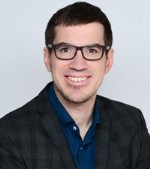
Sebastian Wieschowski
Nuremberg, Germany

Sebastian Wieschowski is an editor at the German Project Management Association (GPM), the national member association of the International Project Management Association (IPMA) in Germany. He is responsible for developing GPM’s media relations and serves on the editorial board of PM Aktuell, a quarterly magazine distributed to more than 6,500 GPM members as well as external stakeholders.
Born in 1985 in northern Germany, Wieschowski developed an early fascination with journalism. His formal education began with active contributions to school and local newspapers. He later completed journalistic training at the Cologne Journalism School for Politics and Economics, earned a Master Level Diploma from the School of Journalism at Eichstaett University, and undertook professional training at a regional newspaper publisher. He also holds a postgraduate M.Sc. degree in Public Health from Hannover Medical School.
In addition to his freelance journalism for national and international outlets, including major German media such as DIE ZEIT, Wieschowski has held senior communications roles since 2012. He first worked as press officer for a private university specializing in social work, then for a psychiatric hospital, and later for an industrial company. In September 2024, he joined GPM’s Marketing and Public Relations department, where he focuses on strengthening the visibility and public relevance of project management through editorial formats such as storytelling.
Alongside his professional career, Sebastian Wieschowski is also active as a freelance author in his lifelong passion, numismatics. He writes for both German- and English-language specialist publications, and his work has been recognized three times by the Numismatic Literary Guild, a writers’ association based in the USA.
Sebastian is a reporter at heart and enjoys discovering inspiring stories and meet people from around the world, a goal that is particularly easy to pursue in the field of project management. He can be contacted at s.wieschowski@gpm-ipma.de.
To view other works by Sebastian, visit his author showcase in the PM World Library at https://pmworldlibrary.net/authors/sebastian-wieschowski/