

An Empathetic Battle
CASE STUDY
By Sebastian Wieschowski
Nuremberg, Germany
INTRODUCTION
Ten centimeters. Barely four inches. To the construction team at Munich’s Deutsches Museum, moving a doorway or adding another layer of insulation may seem like an insignificant adjustment. For curator Frank Dittmann, however, those few inches can determine whether a historic diorama still fits into its intended space, whether a display case suddenly blocks an emergency exit, or whether months of exhibition planning have to begin again. “For the construction team, these are minor details,” Dittmann says. “For us, they can be major issues.”
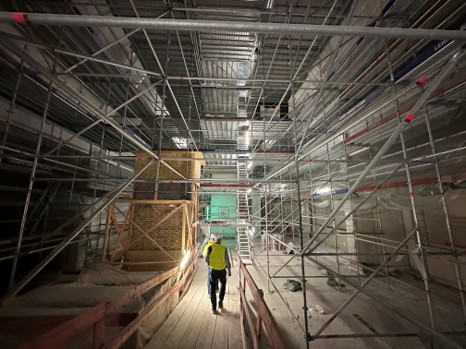
That seemingly trivial example captures the essence of one of Europe’s most ambitious cultural infrastructure projects. The comprehensive renovation of the Deutsches Museum (“German Museum”) is not simply about concrete, fire protection, engineering, or budgets. It is about bringing together two professional worlds that operate according to entirely different rules. On one side are curators, who think in terms of stories, scientific accuracy, and visitor experience. On the other are project managers, architects, engineers, and construction specialists, whose daily work revolves around schedules, procurement, risk management, and technical feasibility.
Between those worlds lies what Dittmann calls an “empathetic battle”—a constant process of negotiation in which conflicting priorities must be reconciled without losing sight of the project’s shared objective.
The phrase may sound paradoxical, yet it perfectly describes the management challenge behind a project whose complexity extends far beyond the construction site itself.
Since 2015, Germany’s largest museum dedicated to science and technology has been undergoing a complete modernization while remaining open to visitors. The project combines the renovation of a historic landmark with the redesign of nearly every major exhibition, the replacement of outdated building systems, and the integration of modern educational concepts—all without shutting the institution down.
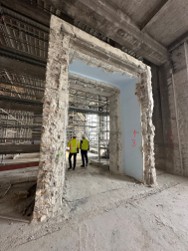 Like many major infrastructure projects, the renovation has encountered escalating costs, shifting schedules, unexpected structural problems, supply-chain disruptions, political oversight, and even the insolvency of the project’s lead architectural firm. What began with an estimated budget of approximately €445 million has grown into a project backed by roughly €750 million in federal and Bavarian state funding.
The scale is extraordinary. About 72,000 square meters of buildings are being modernized, while approximately 45,000 square meters of exhibition space are being completely reimagined. Simply clearing one construction phase required an entire year. Rather than closing the museum altogether, management opted for a phased renovation strategy. The first fully renovated section reopened in 2022 with around twenty entirely new permanent exhibitions covering subjects ranging from robotics and health sciences to aviation. According to the museum, visitor numbers returned to record levels in 2025, while the second major construction phase is expected to continue through 2028.
More…
To read entire article, click here
Author’s note: This article was originally prepared in the German language, after which AI tools were use to translate the story and assist with structure, grammar and punctuation. All details are in the author’s own words, based on a tour and interviews with museum staff.
How to cite this paper: Wieschowski, S. (2026). The Renovation of Germany’s Deutsches Museum: An Empathetic Battle, report; PM World Journal, Vol. XV, Issue VIII, August. Available online at https://pmworldjournal.com/wp-content/uploads/2026/08/pmwj167-Aug2026-Wieschowski-Empathetic-Battle.pdf
About the Author
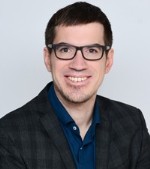
Sebastian Wieschowski
Nuremberg, Germany

Sebastian Wieschowski is an editor at the German Project Management Association (GPM), the national member association of the International Project Management Association (IPMA) in Germany. He is responsible for developing GPM’s media relations and serves on the editorial board of PM Aktuell, a quarterly magazine distributed to more than 6,500 GPM members as well as external stakeholders.
Born in 1985 in northern Germany, Wieschowski developed an early fascination with journalism. His formal education began with active contributions to school and local newspapers. He later completed journalistic training at the Cologne Journalism School for Politics and Economics, earned a Master Level Diploma from the School of Journalism at Eichstaett University, and undertook professional training at a regional newspaper publisher. He also holds a postgraduate M.Sc. degree in Public Health from Hannover Medical School.
In addition to his freelance journalism for national and international outlets, including major German media such as DIE ZEIT, Wieschowski has held senior communications roles since 2012. He first worked as press officer for a private university specializing in social work, then for a psychiatric hospital, and later for an industrial company. In September 2024, he joined GPM’s Marketing and Public Relations department, where he focuses on strengthening the visibility and public relevance of project management through editorial formats such as storytelling.
Alongside his professional career, Sebastian Wieschowski is also active as a freelance author in his lifelong passion, numismatics. He writes for both German- and English-language specialist publications, and his work has been recognized three times by the Numismatic Literary Guild, a writers’ association based in the USA.
Sebastian is a reporter at heart and enjoys discovering inspiring stories and meet people from around the world, a goal that is particularly easy to pursue in the field of project management. He can be contacted at s.wieschowski@gpm-ipma.de.