

STORY
By Dr. Kenneth Smith, PMP
Honolulu, Hawaii
& Manila, The Philippines
“The road to Hell is paved with good intentions”
and in this instance
“Too many cooks spoiled the broth!”
Preamble: In September 1970 — after a sabbatical at MIT — I resumed duty at the US Agency for International Development’s (USAID) Technical Assistance Bureau (TAB) in Washington D.C. During November, I had a quick two-week temporary duty (TDY) assignment to the Dominican Republic (DR) at the request of Bill Averill, USAID’s Mission Agriculture Director there. [I had previously worked with Bill in Vietnam applying critical path, line of balance and other analytical tools to help plan & monitor rice production, land reform activities; and other ag. projects; together with his Deputy Bill Jansen and another AID/Washington Advisor, Earl Kulp.]
But this time, Bill wanted me to evaluate and write a report on a rice-grain silo project — not its actual name — that had gone horribly wrong, but he had “inherited”[1] on arrival at the DR Mission.
Synopsis: Like many countries in Asia, the Dominican Republic in the Caribbean was primarily an agricultural country whose main food crop — rice – was produced by poor farm families on very small plots. However, before being able to store for family consumption, &/or market any surplus major post-harvest losses were experienced – primarily due to poor practices for drying the harvest, as well as inadequate & inappropriate storage. Ever-ready to assist, the USAID Mission contracted an agricultural consultant from Kansas State University on a short-term basis, to formulate a solution — or solutions — to their problems.
While I no longer have all the details in mind, nor a copy of the log-frame or my actual report to verify my comments here, — as best I recall from my “Monday Morning Quarterbacking” perspective then and now — the situation was as follows:
A short-term contract with an agriculture consultant from Kansas State University for a technical study of the production volume in each area and the drying and storage capacity that would be required to address the situation was undertaken. He recommended multiple readily-accessible small, prefabricated metal “Butler-type” grain silos — that could both dry and store the rice grain – be widely dispersed as the most appropriate solution. The silos were readily available in the U.S., and could be purchased there, shipped to, and imported by, the Dominican Republic; then transported to, and erected at numerous sites in close proximity to the rice growing areas in each of two main production areas – the North-West and the North-East regions of the Republic. After erection the silo mini-complexes could be managed, maintained and operated – either by farmer cooperatives or field agencies of the government.
With the short-term consultation concluded, the contractor went back to Kansas. So far, so good!
After arrival, I took the opportunity to field-test a new log-frame evaluation approach under consideration by USAID to scope the project’s “manageable interest’ & “development hypothesis” to better conceptualize it; then discussed it further with Bill and his technical & FSN staff. We identified & retrofitted the essential key performance indicators and targets; then I used the log-frame indicators as a guide to collect actual performance data, as well as obtain additional information about the resultant for my assessment and to write up my report.
More…
To read entire article, click here
How to cite this article: Smith, K. F. (2026). Post-Harvest Post-Mortem. Story, PM World Journal, Vol. XV, Issue VIII – August. Available online at https://pmworldjournal.com/wp-content/uploads/2026/08/pmwj167-Aug2026-Smith-Dom-Rep-Rice-Post-Harvest-Post-Mortem-story.pdf
About the Author
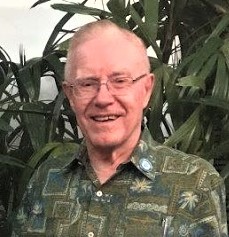
Dr. Kenneth Smith
Honolulu, Hawaii
& Manila, The Philippines

Initially a US Civil Service Management Intern, then a management analyst & systems specialist with the US Defense Department, Ken subsequently had a career as a senior foreign service officer — management & evaluation specialist, project manager, and in-house facilitator/trainer — with the US Agency for International Development (USAID). Ken assisted host country governments in many countries to plan, monitor and evaluate projects in various technical sectors; working ‘hands-on’ with their officers as well as other USAID personnel, contractors and NGOs. Intermittently, he was also a team leader &/or team member to conduct project, program & and country-level portfolio analyses and evaluations.
Concurrently, Ken had an active dual career as Air Force ready-reservist in Asia (Japan, Korea, Vietnam, Indonesia, Philippines) as well as the Washington D.C. area; was Chairman of a Congressional Services Academy Advisory Board (SAAB); and had additional duties as an Air Force Academy Liaison Officer. He retired as a ‘bird’ colonel.
After retirement from USAID, Ken was a project management consultant for ADB, the World Bank, UNDP and USAID.
He earned his DPA (Doctor of Public Administration) from the George Mason University (GMU) in Virginia, his MS from Massachusetts Institute of Technology (MIT Systems Analysis Fellow, Center for Advanced Engineering Study), and BA & MA degrees in Government & International Relations from the University of Connecticut (UCONN). A long-time member of the Project Management Institute (PMI) and IPMA-USA, Ken is a Certified Project Management Professional (PMP®) and a member of the PMI®-Honolulu and Philippines Chapters.
Ken has two KENBOOKS: 1. Project Management PRAXIS which includes many innovative project management tools & techniques; and describes a “Toolkit” of related templates, and 2. MUSINGS on Project Management — a compilation of contemporary concerns in project planning, monitoring & evaluation, with some tools & techniques suggested for their solution. Either or both books are available from Amazon, and their related templates are available directly from him at kenfsmith@aol.com on proof of purchase.
To view other works by Ken Smith, visit his author showcase in the PM World Library at https://pmworldlibrary.net/authors/dr-kenneth-smith/
[1] NOTE: Although USAID personnel were designated ‘Managers’ and/or Advisors for USAID-sponsored Programs and Projects, actual day-to-day responsibility for implementation management rested with the host-country Ministry departmental staff, contractors &/or NGO-designated personnel. Our role was essentially advice, coordination, monitoring, facilitation and evaluation; as well as “Co-tars” i.e. Contract Office Technical Representatives.” Other USAID personnel were responsible for funding and auditing.
Furthermore, — unlike contract personnel who usually stayed with a project for its duration — USAID Managers and Advisors were assigned to Host Country Missions for fixed tours-of-duty – usually 2 or 4 years — then reassigned to other Missions; or rotated to AID/Washington. Due to lengthy project technical gestation periods and annual budget cycles — while supported in-country by a permanent Foreign Service National (FSN) staff – USAID Managers and Advisors inherited extant projects from Mission predecessors; to continue planning or implement, as well as plan new ones which they – in turn — passed on to their successors. Once in a while, USAID personnel also oversaw completions, or – rarely — terminations of projects they had never designed, or may not even have approved had they been involved in formulation, or consulted before finalization & approval – such as was this case.