

Finding Tomorrow’s Business in Today’s Project
Project Business Management
SERIES ARTICLE
By Oliver F. Lehmann
Munich, Germany
“Blos koin Weg verschwenda.” – Never Waste a Trip.
– Swabian saying

Summary
In contractor-side Project Business, business development is commonly treated as a phase that ends when the contract is signed and the work is “thrown over the fence” to the project team. This article argues the opposite: the running project is the contractor’s best source of new business, because the people performing it have access to the customer that no salesperson can match. It introduces Continuous Business Development as the fourth goal of contractor-side Project Business, examines why project managers so rarely pursue it, and sets out what contractor organizations must change so that the trip to the customer is never made with empty hands.
A lesson from Stuttgart
Many years ago, I was a student in Stuttgart, the city where I was born. Like many students, I had to earn my own income alongside my studies, and the job that paid my rent for a while was waiting tables in a restaurant. The owner was an old-school Swabian: friendly to guests, demanding with staff, and with a sharp eye for anything that looked like waste.
One evening, I was walking back to the kitchen with two used plates in my hands when he stopped me. On the table I had just left stood five more plates, plus bowls and tea cups. He looked at my two plates and said, in broad Swabian dialect: “Blos koin Weg verschwenda.” Never Waste a Trip.
It sounds like a basic rule of waiting tables. It is more than that – it is a command in disguise. The message was not about this trip; it was about every trip I would make from then on. If you are going to the kitchen anyway, carry as much as you can. Anything less is waste.
Later, while I was still studying, I earned income by doing courier work. And again: while I took important materials from graphic artists to advertising agencies and then on to the print shops, I often had a second or third urgent transport I could take with me to increase the trip’s business value.
The trip to the kitchen or to the printers is a fixed cost. It takes the same time and the same steps whether I carry two plates or ten, one piece of artwork or many. The only variable is the load. A good waiter does not make more trips; a good waiter makes better use of each one. And so does the courier driver.
I have carried this rule with me for decades, and it has turned out to be as valid in Project Business as it was between the dining room and the kitchen. A contractor who performs a project for a customer is already making the trip. The question is how much the contractor brings back.
More…
To read entire article, click here
Editor’s note: This series of articles is by Oliver Lehmann, author of the book “Project Business Management” (ISBN 9781138197503), published by Auerbach / Taylor & Francis in 2018. See author profile below.
How to cite this article: Lehmann, O.F. (2026). Don’t Waste a Trip – Finding Tomorrow’s Business in Today’s Project, Project Business Management series, PM World Journal, Vol. XV, Issue XI, November. Available online at https://pmworldjournal.com/wp-content/uploads/2026/11/pmwj170-Nov2026-Lehmann-Never-Waste-a-Trip-1.pdf
About the Author
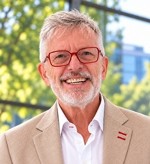
Oliver F. Lehmann
Munich, Germany

Oliver F. Lehmann, MSc, ACE, PMP, is a project management educator, author, consultant, and speaker. In addition, he is the founder of the Project Business Foundation (project-business.org), an independent not-for-profit think tank for professionals and organizations involved in cross-corporate Project Business.
He studied Linguistics, Literature, and History at the University of Stuttgart and Project Management at the University of Liverpool, UK, where he holds a Master of Science Degree (with Merit). Oliver has trained thousands of project managers across Europe, the USA, and Asia in methodological project management, with a focus on certification preparation. In addition, he is a visiting lecturer at the Technical University of Munich.
He has been a member and volunteer at PMI, the Project Management Institute, since 1998 and served as the President of the PMI Southern Germany Chapter from 2013 to 2018. Between 2004 and 2006, he contributed to PMI’s PM Network magazine, for which he provided a monthly editorial on page 1 called “Launch,” analyzing troubled projects around the world.
Oliver believes in three driving forces for personal improvement in project management: formal learning, experience, and observations. He resides in Munich, Bavaria, Germany, and can be contacted at oliver@oliverlehmann.com.
Oliver Lehmann is the author of the books:
- “Situational Project Management: The Dynamics of Success and Failure” (ISBN 9781498722612), published by Auerbach / Taylor & Francis in 2016
- “Project Business Management” (ISBN 9781138197503), published by Auerbach / Taylor & Francis in 2018.
His previous articles and papers for PM World Journal can be found here: