

A Structured Comparative Synthesis of Evidence
from Five West African Countries
PEER REVIEWED PAPER
By Walubengo Wilberforce Wasike, PhD and Walubengo Sylvia Sarah
Nairobi, Kenya
Abstract
This paper presents a structured comparative synthesis of published empirical evidence on the relationships between managerial competence, project risk management and project success in Ghana, Nigeria, Senegal, Sierra Leone and The Gambia. The analysis retains each source study within its original design, sample, measures and outcome definitions; no synthetic cross-country dataset or pooled effect size is constructed. Evidence is drawn from a purposive sample of 200 managers in Ghana, 144 usable responses from construction professionals in Nigeria, 280 responses from construction firms in Senegal, 200 stakeholders in Sierra, and an institutional analysis of disaster-risk management in The Gambia. Across the five countries the evidence consistently supports the practical importance of managerial leadership, competence domains, monitoring systems and risk-management culture or structures. In Nigeria, leadership competencies showed a strong positive correlation with construction-project performance (r = .616). Ghanaian studies document multidimensional project-management competencies and link risk-management practices to multi-dimensional performance indicators. Senegalese evidence demonstrates positive effects of risk-management culture and process on competitive advantage. Sierra Leonean and Gambian studies highlight the constraining or enabling role of institutional, donor and political conditions. The paper concludes that competence development and risk-management practice must be embedded within project governance arrangements, and that future cross-country research requires prospectively harmonized measures, sampling frames and outcome definitions before any pooled or mediated effects can be estimated.
Keywords: managerial competence; project risk management; project success; comparative synthesis; West Africa; project governance
- Introduction
The quality of the manager’s judgement, coordination, communication, and responses to uncertainty have as much influence on the outcome of a project as does the technical plan and the budget. This is especially relevant in projects that function in an environment of limited resources, institutional challenges and evolving demands of stakeholders. The present paper emphasizes the countries of Ghana, Nigeria, Senegal, Sierra Leone, and The Gambia, where published empirical research provides pertinent—but not comparable—evidence regarding managerial competence and risk management and project outcomes.
Managerial competence is conceptualized in this study as multidimensional competency and not technical skills. Both papers reveal a wide range of technical, managerial and interpersonal project-management competencies studied by researchers and Ochoa Pacheco et al. (2023), for instance, synthesize evidence that personal and social competencies, like leadership, communication and emotional intelligence, are often linked to project success. Such a greater knowledge is needed as a manager can technically be capable, but lack the ability to coordinate stakeholders, communicate expectations, deal with uncertainty, or coordinate project actions with institutional requirements.
More…
To read entire paper, click here
How to cite this paper: Wasike, W. W. and Sarah, W. S. (2026). Managerial Competence, Risk Management and Project Success: A Structured Comparative Synthesis of Evidence from Five West African Countries; PM World Journal, Vol. XV, Issue XI, November. Available online at https://pmworldjournal.com/wp-content/uploads/2026/11/pmwj170-Nov2026-Wasike-Sarah-Managerial-Competence-Risk-Management-Project-Success.pdf
About the Authors
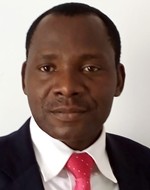
Walubengo Wilberforce Wasike, PhD
Nairobi, Kenya

Walubengo Wilberforce Wasike, PhD, MCIPS, MKISM, MKAPM, MEPAK, MISDS, is a scholar and development practitioner based in Nairobi, Kenya, with more than 20 years of experience in project planning and management, supply chain management, monitoring and evaluation, and institutional governance across the public, private and nonprofit sectors. He holds a PhD in Project Planning and Management from the University of Nairobi, a Master’s degree in Monitoring and Evaluation from Uganda Technology and Management University, and an MBA in Project Management from Kenyatta University. He has served in senior executive and board leadership roles and has experience as a university lecturer, researcher, consultant and trainer. His research interests include project governance, stakeholder engagement, performance management and sustainable development.

Walubengo Sylvia Sarah
Nairobi, Kenya
Walubengo Sylvia Sarah is a Human Resource Management professional with academic training in leadership, management and project management. She holds a Master’s degree in Management and Leadership and a Bachelor’s degree in Management and Leadership (Human Resource specialisation) from the Management University of Africa, Nairobi. She also holds a Diploma in Project Management and a Certificate in Business Management from the Kenya Institute of Management, as well as a Diploma in Human Resource Development from ICM (UK). Her professional experience includes project coordination, human resource administration, monitoring and reporting, and community-based project support. She has a strong interest in applying management theory to practical organizational and development contexts.