

Leading Sustainability and Regeneration in Projects
SERIES ARTICLE
By Dr. Hugo Minney
United Kingdom
 Figure 1 PMs can get out of our shells and bring regeneration to the built environment
Abstract
The built environment accounts for 40% of global CO2 emissions , yet project management often treats sustainability as a “tick-box” compliance exercise rather than a driver of value. This article argues that the project manager’s mandate must shift from mitigating harm to delivering regenerative outcomes through early-stage decisions in material selection and asset longevity. By utilizing the Benefits Dependency Network (BDN) and innovations like mass timber and 4D Digital Twin planning, project managers can decouple construction from traditional linear constraints, reducing schedules by up to 50%. Through the lens of the GenZero schools and Stockholm Wood City, we demonstrate how the transition to a manufacturing-led modular approach creates assets that act as “material banks” for the future.
Introduction: Why PMs must lead regeneration
We are currently building liabilities, not assets. Every time a project manager prioritizes ‘tick-box’ compliance over material longevity, they are effectively signing a check for future rework. It’s a dilemma every project manager faces: how to be proactive about sustainability and regeneration (Minney 2025c). Being proactive increases the cost of the project (often mitigated by innovation); whereas the default position: compliance is just something you have to do (or pay a fine for not doing).
Compliance means viewing “green building” through a narrow lens — a series of boxes to be ticked to satisfy benchmarks like BREEAM or LEED (BREEAM 2024; Greenly Institute 2024; Minney 2025d). However as climate extremes escalate, compliance alone can reduce the value of the construction to the client, risking rework and hidden additional costs (Minney 2025f).
The built environment is responsible for approximately 40% of annual global CO2 emissions (UNEP 2025). This figure includes embodied carbon in materials, construction operations and heating and lighting of the buildings once constructed. In UK, the built environment contributes to 25% of the total UK greenhouse gas footprint in a given year (UKGBC 2019). UK has made strides in operational efficiency, but the embodied carbon in the materials of our buildings remains a massive, largely unaddressed liability.
The project manager’s mandate is moving from the downstream mitigation of environmental harm (delivering a project using sustainable processes) toward the proactive delivery of regenerative outcomes (arguing for a change in scope) (Minney 2025c). This creates an inspiring place to work, and treats sustainability not as an abstract goal or a moralising exhortation, but as a direct outcome of early-stage project decisions. These decisions — concerning material selection, supply chain ethics, and asset longevity — determine whether a project leaves a positive legacy or an embodied carbon liability (Minney 2025e), and whether a project supports career development or is an anchor keeping the project manager in the ‘old way’ of doing things.
More…
To read entire report, click here
Editor’s note: The author Dr. Hugo Minney is a Fellow of APM (Association for Project Management), a Member of PMI and PMI UK, Co-Chair of APM’s Benefits and Value SIG, and committee member of PMI UK’s Sustainability Community of Action. For more, see his author profile at the end of this article.
How to cite this work: Minney, H. (2026). From green building to timber innovation, Leading Sustainability and Regeneration in Projects, series article, PM World Journal, Volume XV, Issue V, May. Available online at https://pmworldjournal.com/wp-content/uploads/2026/05/pmwj164-May2026-Minney-From-Green-Building-to-Timber-Innovation-8.pdf
About the Author
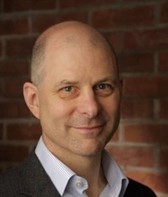
Dr Hugo Minney
London, UK

Dr. Hugo Minney is a Fellow of APM (Association for Project Management), a Member of PMI and PMI UK, Co-Chair of APM’s Benefits and Value SIG and committee member of PMI UK’s Sustainability Community of Action (none of which are paid).
Minney set out to become a farmer but was defeated by bureaucracy. He sold high ticket computer systems and specialist software for workforce planning; joined the National Health Service for 18 years (and as a Chief Executive for the last 7 of these) and is now a project management consultant with a sideline chairing a charity restoring the sense of community for young people.
Minney works in project management, and in particular benefits management, motivating team members by reporting what they are achieving together and changing the community and culture to want to achieve – together. At present, he’s more involved on the governance side, accredited as a Social Value practitioner and Chartered Project Professional, and reviewing the balance of projects and contribution to objectives and benefits across portfolios.
Dr. Minney can be contacted at hugo.minney@thesocialreturnco.org
To view previous works by Hugo Minney, visit his author showcase in the PM World Library at https://pmworldlibrary.net/authors/dr-hugo-minney/