

‘Air Bersih, Gaya Sehat’
STORY
By Dr. Kenneth Smith, PMP
Honolulu, Hawaii
& Manila, The Philippines
“Water, water, everywhere, and all the boards did shrink;
Water, water, everywhere, nor any a drop to drink”
The Rime of the Ancient Mariner
Samuel Taylor Coleridge, 1798
Preamble: Reassigned to Indonesia in August 1978 by the US Agency for International Development (USAID) was a dramatic change from my previous Project Manager role in Korea institution-building to field-test various Rural Public Health objectives. Now I was Acting Director of USAID’s Health, Population & Nutrition (HPN) Division, until a public health professional or physician was reassigned. [1] While finalizing USAID’s role in a new ‘Child Survival Project’ jointly-funded by a consortium of international donors, I now had to supervise several professional health specialists managing[2] USAID/Indonesia’s on-going Public Health Portfolio; [3] as well as review, refine, prune &/or improve the existing portfolio — where feasible.
Likewise, I soon discovered USAID’s ‘Programs’ & ‘Projects’ were merely a loose Portfolio of about 30 desirable but disparate ‘initiatives’ supporting Indonesia’s Public Health Ministry.
____________________
Phil Smart was a key technical Advisor on my Water, Sanitation & Hygiene (WASH) staff. An experienced public health & sanitary engineer, Phil had been in Indonesia for a considerable time, juggling several activities in food inspection, potable water, waste disposal & sanitation. Phil also had traveled widely and spoke Indonesian fluently, so he always accompanied me as my technical expert, interpreter/translator[4] and tour guide on ‘ground truthing’ trips to familiarize me with my newly acquired portfolio.
I also had two consultants under contract from Georgia Tech [5] directly assisting a number of dispersed Indonesian small business enterprises to manufacture a deep-well water-lift pump[6] — developed by the Battelle Memorial Institute (BMI). The Health Ministry then purchased the pumps for installation in nearby community ‘Kampungs.’ In addition to this private enterprise water-pump manufacture & government procurement coordination, USAID supported another ‘initiative’ to promote & install sanitary sealed-toilets in community Kampungs. Subsequently the Ministry of Health merged these three diffused projects – Government-sponsored Small-business Pump manufacture; Government potable water well-drilling, capped with the BMI pumps; and Government Kampung Toilet construction — into one ‘Program’ for management.
Intrigued to see what I had ‘inherited — as well as possibly restructure from USAID’s standpoint — I accompanied Phil and Kermit on a field trip to Banjarmasin, the capital of South Kalimantan province, Borneo,[7] to see this new 3-in-1 program in action, and get some feedback from the target beneficiaries as well as the program field implementers.
Arriving at the site, we were met by the local Indonesian Ministry program officer and the Kampung chief who proudly showed us their pride & joy. The well had been drilled; the Battelle pump installed; and everything was working fine. The villagers were very happy with the outcome.
However, the all-enclosed sealed-toilet had been erected adjacent to the well — like a small outhouse — on the same concrete base! Moreover, the officials reported they had been able to save enough cement from the project to build another little patio nearby for community use.
More…
To read entire article, click here
How to cite this article: Smith, K. F. (2026). Clean Water, Healthy Ways. PM World Journal, Vol. XV, Issue IX – September. Available online at https://pmworldjournal.com/wp-content/uploads/2026/09/pmwj168-Sep2026-Smith-Clean-Water-Healthy-Ways-story.pdf
About the Author
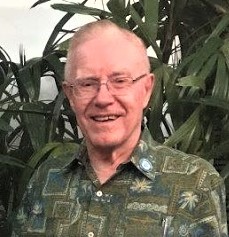
Dr. Kenneth Smith
Honolulu, Hawaii
& Manila, The Philippines

Initially a US Civil Service Management Intern, then a management analyst & systems specialist with the US Defense Department, Ken subsequently had a career as a senior foreign service officer — management & evaluation specialist, project manager, and in-house facilitator/trainer — with the US Agency for International Development (USAID). Ken assisted host country governments in many countries to plan, monitor and evaluate projects in various technical sectors; working ‘hands-on’ with their officers as well as other USAID personnel, contractors and NGOs. Intermittently, he was also a team leader &/or team member to conduct project, program & and country-level portfolio analyses and evaluations.
Concurrently, Ken had an active dual career as Air Force ready-reservist in Asia (Japan, Korea, Vietnam, Indonesia, Philippines) as well as the Washington D.C. area; was Chairman of a Congressional Services Academy Advisory Board (SAAB); and had additional duties as an Air Force Academy Liaison Officer. He retired as a ‘bird’ colonel.
After retirement from USAID, Ken was a project management consultant for ADB, the World Bank, UNDP and USAID.
He earned his DPA (Doctor of Public Administration) from the George Mason University (GMU) in Virginia, his MS from Massachusetts Institute of Technology (MIT Systems Analysis Fellow, Center for Advanced Engineering Study), and BA & MA degrees in Government & International Relations from the University of Connecticut (UCONN). A long-time member of the Project Management Institute (PMI) and IPMA-USA, Ken is a Certified Project Management Professional (PMP®) and a member of the PMI®-Honolulu and Philippines Chapters.
Ken has two KENBOOKS: 1. Project Management PRAXIS which includes many innovative project management tools & techniques; and describes a “Toolkit” of related templates, and 2. MUSINGS on Project Management — a compilation of contemporary concerns in project planning, monitoring & evaluation, with some tools & techniques suggested for their solution. Either or both books are available from Amazon, and their related templates are available directly from him at kenfsmith@aol.com on proof of purchase.
To view other works by Ken Smith, visit his author showcase in the PM World Library at https://pmworldlibrary.net/authors/dr-kenneth-smith/
[1] The previous HPN Director was emergency-med-evac’d while I was temporarily in Jakarta assisting planning the joint Child Survival Project. So, subsequently, I was fortuitously reassigned from Korea.
[2] NOTE: Although USAID personnel were designated ‘Managers’ and/or Advisors for the Programs and Projects we sponsored, actual day-to-day responsibility for implementation rested with the host-country Ministry departmental staff, USAID contractors &/or NGO-designated personnel. Our role was advice, coordination, monitoring, facilitation, and evaluation, as well as USAID’s “Contract Office Technical Representatives” (COTARS). Other USAID personnel were responsible for financing & auditing.
[3] Which was essentially USAID’s ‘old school’ Santa Claus-style ad hoc myriad micro-technical financial assistance support endeavors; that Mission Director Tom Niblock wanted turned around. [NOTE: After its inception in 1961 to assist governments of developing countries by providing large-scale infrastructure projects, and macro-economic growth programs in diverse aspects of agriculture, education, public health, as well as emergency disaster relief; USAID faced continual congressional criticism because it was unable to justify its ‘Foreign Aid’ portfolio accomplishments in terms of benefit/cost, cost/effectiveness, or return on investment. In 1971, AID/Washington mandated improved systematic projectized planning — facilitated with a new ‘Log-frame’ methodology — to address congressional concerns. However, in 1973, a “New Directions” policy in Foreign Assistance refocused USAID to prioritize basic humanitarian needs in rural communities, over infrastructure. Numerous diverse activities emerged with that shift, but exacerbated project targeting, monitoring, accomplishment & accountability; as well as even more difficult to satisfy Congress. Furthermore — given multi-year on-going activities; inability & unwillingness to terminate them without obvious inappropriateness, ineffectiveness or malfeasance; and lengthy gestation periods to develop & launch new projects – turning USAID’s ‘ship of state’ around was a very cumbersome and slow process.]
[4] Strictly speaking: Interpreter for speech, and Translator for the written word; but in practice often used interchangeably.
[5] Kermit Moh was the ‘COP’ – i.e. Chief of Party. [I still remember his name because it reminded me of a Sesame Street character my younger kids used to watch on TV.]
[6] The principal features of the Battelle pump were that it had a capability to lift water up to 100 meters vs. 10 meters of traditional pumps. Furthermore, the pump was made of stainless steel, had fewer moving parts, was easier to handle – even by women and small children (who in most developing country environments were the ones tasked with the water “fetch and carry” duty) — and was less susceptible to breakage, or malfunction than traditional cast iron “Dragon pumps”.
[7] Situated on a labyrinth of canals, its nickname is “the city of a thousand rivers.” [I was intrigued by the numerous decrepit shells of old American cars lining the banks of the canals and roadways.]