

Social Value as a Strategic Driver
of Organisational Success
Leading Sustainability and Regeneration in Projects
SERIES ARTICLE
By Dr. Hugo Minney
United Kingdom
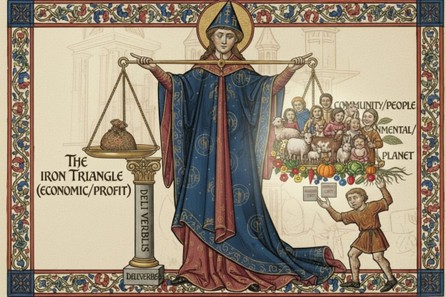
Figure 1 Investing in the community generates greater rewards than seeking financial profit only, and avoided costs can be added to the return on investment. © Hugo Minney
Abstract
Aspirations for a sustainable society often reference the 5 P pillars (people, planet, prosperity, peace and partnership). For the purposes of managing projects, we use criteria for success that can be influenced and measured more quickly: planet, prosperity, and split people into two, wellbeing (often internal stakeholders) and community (often external stakeholders). The community pillar is often mischaracterised as merely philanthropic, but we argue it is a critical strategic asset supporting modern project delivery. Cultivating community engagement translates directly into enhanced organisational effectiveness, improved profitability, and sustained project success. Using robust quantification methodologies, such as Social Return on Investment (SROI) and avoided cost analysis, we show that it is possible to translate supposedly intangible benefits such as social goodwill into a measurable financial return. This is not just academic. Projects that secure a strong ‘Social Licence to Operate’ (SLO) effectively mitigate high-impact risks — for example project delays and regulatory or public obstructions — while establishing a reservoir of trust that can be strategically leveraged to facilitate future change requests, project expansions, and long-term legacy development. We establish that investing in community is investing in resilience, proving that ethical commitment is the most profitable path forward.
Keywords: Community Sustainability, Social Value, Social Licence to Operate, Avoided Costs, Project Risk Management, Benefits Realisation, Regenerative Projects, Quantification.
Introduction: The Pivotal Role of the Community Pillar in Regenerative Projects
Contextualizing the four pillars of sustainability
We cannot continue to dig, dump and depart (over-exploit finite resources, pollute, and expect to be able to move on) because there’s nowhere left to move on and we’ve gained a reputation for destruction where we live now. This requires a re-alignment of projects towards sustainability and regeneration, and to achieve this requires a fundamental re-think of how to measure project success. Anyone who has ever sat in a benefits review board knows that the “iron triangle” (Atkinson 1999) only reflects the drivers of project management success, not project success. What people care about — both inside and outside the project — is far broader (Minney 2025c).
United Nations recognises 5 Ps (People, Planet, Prosperity, Peace and Partnership) (Minney 2025a) or areas where we are seeking balanced improvement. Projects need more immediate and causative areas for influence and measurement, and we have proposed that four pillars work well for this: Environmental (Planet), Economic (Prosperity for the nation or region), Community (People in communities), and Human Wellbeing (People as individuals) (Minney 2025d). These 4 pillars are about things a project can influence in the first or second order.
The previous articles in in this series explored the other three pillars, with the November article quantifying the impact of Human Wellbeing, discussing internal human capital dynamics, such as fostering psychological safety, enhancing talent retention, and boosting productivity within the project team (Minney 2025g). This individualistic perspective addresses the flourishing of the internal workforce. We now turn our attention outward to the Community pillar, which concerns the project’s contribution to external societal structures, local infrastructure, social cohesion, and the equitable distribution of benefits to collective groups residing near or impacted by the project.
The explicit separation of these two “People” pillars — Community (external social capital) and Human Wellbeing (internal human capital) — is a critical distinction for targeted resource allocation and effective risk management…
More…
To read entire report, click here
Editor’s note: The author Dr. Hugo Minney is a Fellow of APM (Association for Project Management), a Member of PMI and PMI UK, Co-Chair of APM’s Benefits and Value SIG, and committee member of PMI UK’s Sustainability Community of Action. For more, see his author profile at the end of this article.
How to cite this work: Minney, H. (2025). Building Stronger Communities Through Projects: Social Value as a Strategic Driver of Organisational Success, Leading Sustainability and Regeneration in Projects, series article, PM World Journal, Volume XIV, Issue XII, December. Available online at https://pmworldjournal.com/wp-content/uploads/2026/01/pmwj159-Dec2025-Minney-Building-Stronger-Communities-Through-Projects-sustainability-6.pdf
About the Author
Dr Hugo Minney
London, UK

Dr. Hugo Minney is a Fellow of APM (Association for Project Management), a Member of PMI and PMI UK, Co-Chair of APM’s Benefits and Value SIG and committee member of PMI UK’s Sustainability Community of Action (none of which are paid).
Minney set out to become a farmer but was defeated by bureaucracy. He sold high ticket computer systems and specialist software for workforce planning; joined the National Health Service for 18 years (and as a Chief Executive for the last 7 of these) and is now a project management consultant with a sideline chairing a charity restoring the sense of community for young people.
Minney works in project management, and in particular benefits management, motivating team members by reporting what they are achieving together and changing the community and culture to want to achieve – together. At present, he’s more involved on the governance side, accredited as a Social Value practitioner and Chartered Project Professional, and reviewing the balance of projects and contribution to objectives and benefits across portfolios.
Dr. Minney can be contacted at hugo.minney@thesocialreturnco.org
To view previous works by Hugo Minney, visit his author showcase in the PM World Library at https://pmworldlibrary.net/authors/dr-hugo-minney/