

November 2026 PM Update from Nepal
 REPORT
By Yamanta Raj Niroula
International Correspondent
Kathmandu, Nepal
Beyond Emergency Response:
Project Management for Recovery from the
August 2026 Floods in Nepal
- Introduction
Recovery after a major disaster is usually judged by how quickly it restores what was lost. A harder test is whether it leaves communities safer than before. Nepal’s experience after the 2015 earthquake shows that these aims can pull apart. Relocation and reconstruction programmes, carried out with good intentions and under real pressure, can place people and assets in locations that a later hazard assessment classifies as high risk. Recovery can then rebuild vulnerability. Whether it does depends largely on how the work is planned, scheduled, financed, supervised and measured, and that is the work of project management.
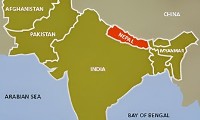
This report examines recovery from the August 2026 Rasuwa-Bhotekoshi flood as a project and programme management problem. Its principal evidence is the Government of Nepal’s Rapid Damage and Needs Assessment (RDNA), supplemented by the World Bank reports, published scientific analyses and the national policy position set out by Prime Minister Balendra Shah at the 81st Session of the United Nations General Assembly on September 24, 2026. The Prime Minister framed the disaster as a matter of climate justice, called for regional cooperation on glacial lake monitoring and early warning, and criticized the priorities of the international system. These are statements of policy, and they have practical consequences for recovery programme managers. They influence what finance is available and on what terms, what data is shared across borders, and what logistics capacity can be mobilized for remote communities.
The argument is that recovery works best when it is managed as one programme with a defined purpose: communities that can live safely, earn a living and reach the services they need. The RDNA’s evidence points that way. Needs are concentrated in a few large packages, services depend on shared access routes, and many cost lines overlap across sectors. Each of these is a programme-level problem that no single sector plan can resolve.
The sections that follow cover the assessed scale of needs, integrated programme control, risk-informed reconstruction, resettlement, livelihoods, performance measurement, financing, climate and regional dimensions, and programme risk. They close with practical implications. Many figures are preliminary and will change when the government completes its Post-Disaster Needs Assessment (PDNA). Statements attributed to officials are reported as positions, not as commitments of funding or delivery.
More…
To read entire report, click here
How to cite this work: Niroula, Y. R. (2026). Beyond Emergency Response: Project Management for Recovery from the August 2026 Floods in Nepal, report, PM World Journal, Vol. XV, Issue XI, November. Available online at: https://pmworldjournal.com/wp-content/uploads/2026/11/pmwj170-Nov2026-Niroula-Beyond-Emergency-Response-Recovery-in-Nepal-report.pdf
About the Author

Yamanta Niroula
Kathmandu, Nepal

Yamanta Niroula is a seasoned Project Management Professional with over 17 years of extensive experience in engineering, infrastructure development, and project management across diverse global environments. His expertise includes project planning, procurement, contract management, stakeholder coordination, and risk mitigation, with a strong focus on executing projects in remote and developing regions under complex operational conditions.
Yamanta holds a Bachelor of Engineering in Civil Engineering and a Master of Arts in Rural Development, along with a Diploma in Civil Engineering. He is a certified Project Management Professional (PMP®) and an active member of the Project Management Institute (PMI) since 2010.
Yamanta has extensive experience in project management, successfully overseeing all stages of construction projects from initial planning to final evaluation. He specializes in managing complex processes, including procurement, contracting, and execution, while maintaining efficiency and regulatory compliance. By staying updated on industry standards and advancements, he has ensured that projects are forward-thinking, sustainable, and adaptable to changing environments.
Yamanta has successfully managed large-scale infrastructure projects, including roads, electrical infrastructure, wastewater treatment plants, logistics facilities, and disaster recovery programs. He has served in various capacities as Project Controls Specialist, Design Manager, Planning Manager, Engineer and Project Manager across international organizations and UN agencies in Nepal, the Maldives, Singapore, Afghanistan, the Philippines, Nigeria, Yemen, Sudan, and Ethiopia.
He has been responsible for project design, planning, execution, and control, ensuring timely delivery, budget adherence, and quality assurance while enhancing overall program outputs.
Yamanta lives in Kathmandu, Nepal and can be contacted at niroulayr@gmail.com
View his full correspondent profile at https://pmworldlibrary.net/yamanta-raj-niroula/
To view other works by Yamanta Ray Niroula, visit his author showcase at https://pmworldlibrary.net/authors/yamanta-raj-niroula/